
GMN HCS 160 Spindle Repair: When Precision Starts to Drift
If you’re researching GMN HCS 160 spindle repair, chances are the spindle hasn’t “failed” in the traditional sense. It still runs smoothly. It may not be loud. Yet parts are no longer holding size the way they used to.
This is a classic HCS 160 scenario — and one that often points to bearing and preload changes affecting thermal and positional stability, not catastrophic failure.
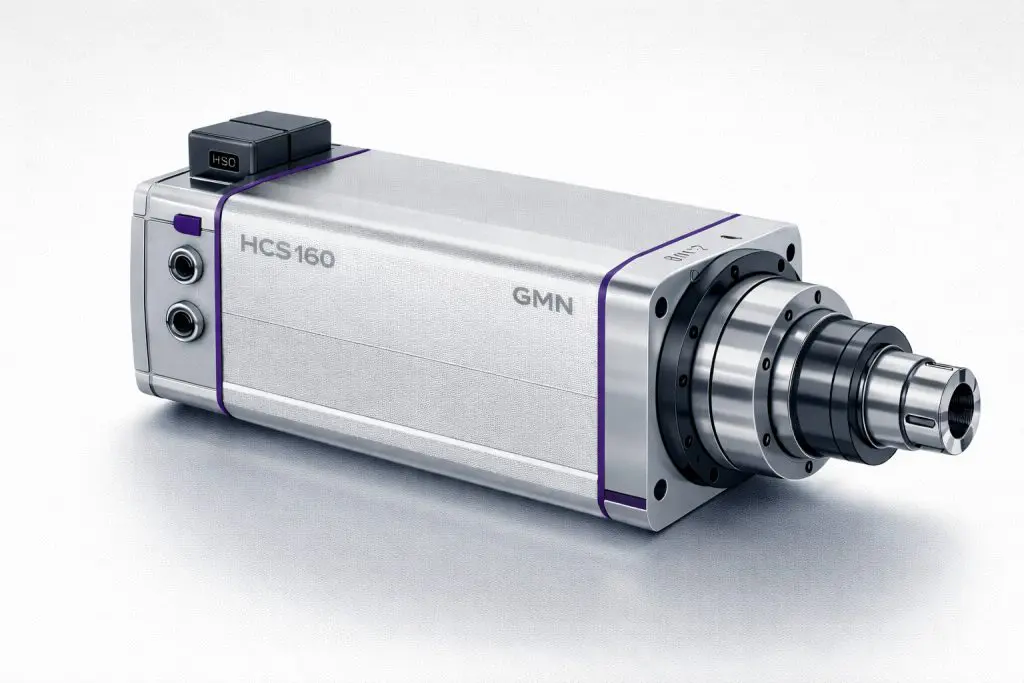
he HCS 160 is widely used in high-precision grinding applications, including:
- Internal and external cylindrical grinding
- Tight-tolerance finishing operations
- Aerospace, medical, and tooling components
In these environments, even small internal changes inside the spindle directly affect part quality.
How the GMN HCS 160 Is Typically Used
The HCS 160 is widely used in high-precision grinding applications, including:
- Internal and external cylindrical grinding
- Tight-tolerance finishing operations
- Aerospace, medical, and tooling components
In these environments, even small internal changes inside the spindle directly affect part quality.
Early Symptoms Seen in HCS 160 Spindles
Size and geometry drift
Users often report:
- Parts drifting out of tolerance over long runs
- Geometry changing as the spindle warms
- Increased correction during in-process measurement
Finish degradation without chatter
Unlike milling spindles:
- There may be little or no audible vibration
- Surface finish degrades subtly
- Scrap increases before alarms appear
What’s Typically Happening Inside the HCS 160
Bearing preload and thermal behavior shift
As bearings wear:
- Preload changes slightly
- Heat distribution becomes uneven
- Shaft growth affects grinding accuracy
Because the spindle still feels smooth, these issues are easy to misinterpret.
Why HCS 160 Problems Are Often Misdiagnosed
Most users initially adjust:
- Dressing cycles
- Offsets and compensation
- Machine warm-up routines
While these help temporarily, repeated size drift usually indicates internal spindle wear, not process instability alone.
Repair Options for GMN HCS 160 Spindles
Accuracy-focused evaluation
A proper evaluation can:
- Assess bearing condition and preload
- Identify thermal instability
- Prevent unnecessary machine adjustments
Precision bearing rebuild
When bearing wear is confirmed:
- Bearings are replaced and preloaded correctly
- Thermal behavior is stabilized
- Accuracy and repeatability are restored
Why Continuing to “Chase Tolerance” Gets Expensive
Running through accuracy issues:
- Increases scrap and rework
- Masks spindle wear
- Leads to larger repairs later
Precision spindles rarely fail suddenly — they fail quietly.
Manufacturer-Recommended Maintenance for the GMN HCS 160
According to GMN’s documentation for high-speed grinding spindles, maintaining accuracy and bearing life depends heavily on proper operating and maintenance practices.
Manufacturer guidance generally emphasizes:
- Maintaining correct lubrication conditions
- Allowing proper warm-up before precision grinding
- Monitoring temperature and accuracy over time
- Avoiding operating conditions that cause excessive thermal load
- Inspecting spindle behavior regularly rather than waiting for noise or vibration
For complete specifications and maintenance instructions, always consult the official GMN documentation.
👉 Reference:
GMN HCS 160 Spindle Manual (PDF)
https://www.gmn.de/en/products/spindles/high-speed-spindles/
(Navigate to HCS series documentation from GMN’s official site)
Preventative Practices That Help HCS 160 Spindles Last Longer
To extend service life:
- Track size stability across production runs
- Use consistent warm-up procedures
- Address small accuracy changes early
In precision grinding, early attention prevents major downtime.
If your GMN HCS 160 still runs but no longer holds tolerance consistently, an early spindle evaluation can help determine whether bearing wear is already affecting accuracy.
Illustration Disclaimer
Illustrations are representative and used for educational purposes; actual spindle configurations may vary.