


Types, Failure Causes, and Replacement Considerations
High-speed electrospindles manufactured by HSD Mechatronics rely on precision bearing systems to maintain stability, accuracy, and rotational speeds exceeding 18,000–24,000 RPM.
These bearings operate under extreme conditions, including high rotational loads, heat, and contamination from machining environments. Over time, even the highest-quality spindle bearings will wear and eventually require replacement.
This guide explains how HSD spindle bearings work, common failure causes, and what to expect during a professional spindle rebuild.
Types of Bearings Used in HSD Spindles
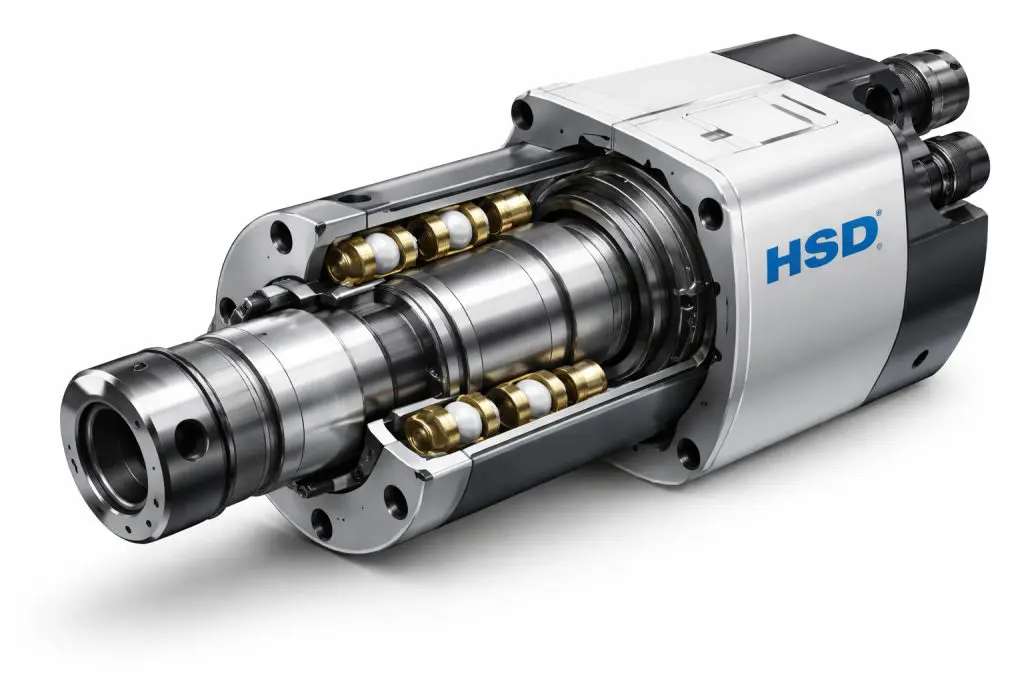
HSD electrospindles typically use high-precision angular contact bearings designed for high-speed operation.
Angular Contact Ceramic Hybrid Bearings
Most modern HSD spindles utilize ceramic hybrid bearings, which combine:
- Steel bearing races
- Ceramic (silicon nitride) balls
Advantages include:
- Higher RPM capability
- Reduced friction
- Lower heat generation
- Longer lifespan in high-speed environments
These bearings are often installed in matched sets to control spindle preload and maintain rigidity during machining.
Bearing Arrangement
Spindle bearings are typically arranged in a configuration such as:
- Front bearing cluster (tool side)
- Rear support bearing
The front cluster absorbs cutting forces and maintains tool rigidity, while the rear bearing supports the rotor and motor assembly.
Proper bearing preload is critical. Too little preload can cause vibration, while too much preload generates excessive heat and premature failure.
Common Causes of HSD Bearing Failure
Contamination
One of the most common causes of spindle bearing failure is contamination.
Typical sources include:
- Wood dust
- Composite fibers
- Coolant intrusion
- Metal particles
If seals or air purge systems fail, contaminants can enter the bearing cavity and damage the raceways.
Improper Tool Handling
Damage to the spindle taper or tool interface can introduce vibration and shock loads that rapidly destroy bearings.
Examples include:
- Hammering on a stuck tool holder
- Using damaged tool holders
- Debris inside the taper
Even minor taper damage can create vibration that shortens bearing life.
Overheating
High temperatures degrade lubrication and increase bearing wear.
Overheating can be caused by:
- Excessive cutting loads
- Improper lubrication
- Cooling system failures
- Running the spindle above rated RPM
Thermal expansion can also affect bearing preload and accelerate damage.
Normal Wear
Even in ideal conditions, spindle bearings have a finite lifespan.
Typical life expectancy ranges from:
5,000 to 20,000 operating hours
Factors that influence lifespan include:
- spindle speed
- machining loads
- environmental contamination
- maintenance practices
Signs of Spindle Bearing Failure
Operators often notice early warning signs before catastrophic failure occurs.
Common symptoms include:
- High-pitched whining noise at speed
- Increased vibration during machining
- Reduced surface finish quality
- Excessive heat around the spindle housing
- Tool holder movement or chatter
Ignoring these warning signs can result in severe damage to the spindle shaft or housing.
The Bearing Replacement Process
Replacing spindle bearings is a precision process that requires specialized equipment and expertise.
At Atlanta Precision Spindles, the process typically includes:
Complete Spindle Disassembly
The spindle is fully disassembled to inspect internal components, including:
- shaft condition
- bearing seats
- rotor balance
- tool interface
Precision Inspection
Critical surfaces are measured to ensure they remain within tolerance.
This includes:
- shaft runout
- taper condition
- bearing seat geometry
Installation of Matched Bearing Sets
New high-precision bearings are installed with carefully controlled preload.
Correct preload is essential for:
- spindle rigidity
- thermal stability
- high-speed performance
High-Speed Balancing
After assembly, the spindle is dynamically balanced to reduce vibration and improve longevity.
Balancing ensures smooth operation at high RPM and protects the new bearings.
Final Testing
The rebuilt spindle undergoes testing for:
- vibration levels
- temperature stability
- runout accuracy
- operational performance
Can Spindle Bearings Be Replaced Without Rebuilding the Entire Spindle?
In most cases, replacing spindle bearings requires complete disassembly of the spindle assembly.
Because the process involves:
- precision measurement
- preload adjustment
- high-speed balancing
bearing replacement is typically performed as part of a full spindle rebuild.
Attempting to replace bearings without proper equipment often results in premature failure.
Extending the Life of HSD Spindle Bearings
Operators can significantly extend bearing life by following proper maintenance practices:
- keep tool holders clean and damage-free
- ensure air purge systems are functioning
- avoid excessive cutting loads
- monitor spindle temperature and vibration
- address unusual noise immediately
Preventive maintenance can prevent costly downtime and catastrophic spindle failures.
HSD Spindle Bearing Repair Services
Technicians at Atlanta Precision Spindles specialize in rebuilding high-speed CNC router spindles manufactured by HSD Mechatronics.
Services include:
- spindle bearing replacement
- drawbar repair
- taper inspection and restoration
- high-speed balancing
- final vibration and performance testing
Early diagnosis of bearing problems can prevent severe damage and reduce repair costs.
FAQ
What type of bearings do HSD spindles use?
Most HSD electrospindles use precision angular contact ceramic hybrid bearings designed for high-speed operation.
How long do spindle bearings last?
Under normal conditions, spindle bearings typically last 5,000–20,000 hours, depending on usage and maintenance.
Can spindle bearings fail suddenly?
Yes. Once bearing wear begins, damage often accelerates quickly, sometimes leading to catastrophic failure.
Is spindle bearing replacement expensive?
Bearing replacement is significantly less expensive than replacing the entire spindle assembly and can restore full performance when performed correctly.