

If you’re researching HSD ES988 spindle repair, you’re often at a crossroads. The spindle still runs, but performance under load has changed. Vibration increases during aggressive cuts, heat builds during long cycles, and productivity begins to suffer.
For ES988 users, the real question usually isn’t “Is something wrong?” — it’s “What’s the smartest next move?”

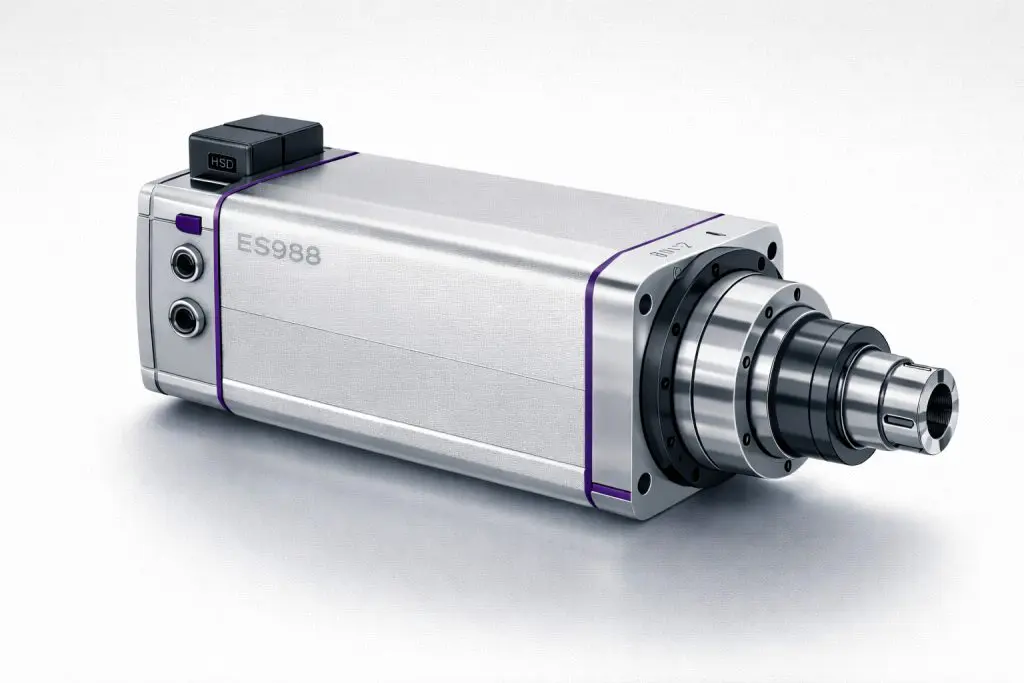
- The ES988 is typically installed in:
- High-output CNC routers
- Heavy nested-based manufacturing lines
- Shops running long, continuous production cycles
How the HSD ES988 Is Commonly Used
The ES988 is typically installed in:
- High-output CNC routers
- Heavy nested-based manufacturing lines
- Shops running long, continuous production cycles
- Applications requiring higher torque and sustained load capacity
These conditions push the spindle close to its mechanical limits over time.
Early Symptoms ES988 Users Notice
Performance loss under load
Common reports include:
- Cuts that feel less stable during roughing
- Increased vibration when pushing feed rates
- More heat during extended cycles
Spindle still “works”
Early on:
- Startup feels normal
- Noise may remain moderate
- Problems appear only when productivity demands increase
This often delays evaluation.
What’s Typically Happening Inside the ES988
Bearing fatigue from sustained stress
As bearings wear:
- Radial stiffness decreases
- Heat generation increases
- Load-related vibration becomes more pronounced
This degradation is gradual but cumulative.
Why ES988 Issues Are Often Misdiagnosed
Many users initially assume:
- The machine frame is flexing
- Material quality has changed
- Programming needs adjustment
While these factors contribute, repeated load-related instability often points back to the spindle.
Repair vs Upgrade vs Replacement: How to Decide
Repair
Best when:
- Housing and shaft surfaces remain intact
- Performance loss is primarily bearing-related
- Downtime and cost need to be minimized
A proper rebuild can restore stiffness and thermal behavior.
Upgrade
Best when:
- Higher duty cycles are now required
- Original configuration struggles with current loads
- Long-term reliability is the priority
Upgrades may involve higher-performance bearing options or improved balancing strategies.
Replacement
Best when:
- Structural damage is present
- The spindle no longer fits production needs
- Repair costs approach replacement cost
Replacement should be a last resort, not a default.
Manufacturer-Recommended Maintenance for the HSD ES988
HSD’s electrospindle documentation for the ES9XX series emphasizes maintenance practices that help manage load and heat over long production cycles.
Manufacturer guidance generally includes:
- Keeping the spindle taper and tool interface clean
- Monitoring spindle temperature during extended operation
- Ensuring unobstructed airflow and cooling
- Avoiding unnecessary lubrication, as bearings are factory-lubricated for life
- Performing routine inspections before long production runs
These recommendations align closely with field experience — ES988 failures are usually stress-related, not sudden.
👉 Reference:
HSD ES9XX Series Spindle Manual (PDF)
https://www.manualslib.com/manual/1532502/Hsd-Es915.html
Preventative Practices That Help ES988 Spindles Last Longer
To extend service life:
- Monitor vibration trends under heavy load
- Avoid pushing worn spindles into aggressive roughing
- Address heat buildup early during long cycles
Managing cumulative stress is the key.
If your ES988 is no longer delivering the performance it once did, an evaluation can help determine whether repair, upgrade, or replacement makes the most sense for your operation.
Illustration Disclaimer
Illustrations are representative and used for educational purposes; actual spindle configurations may vary.–