


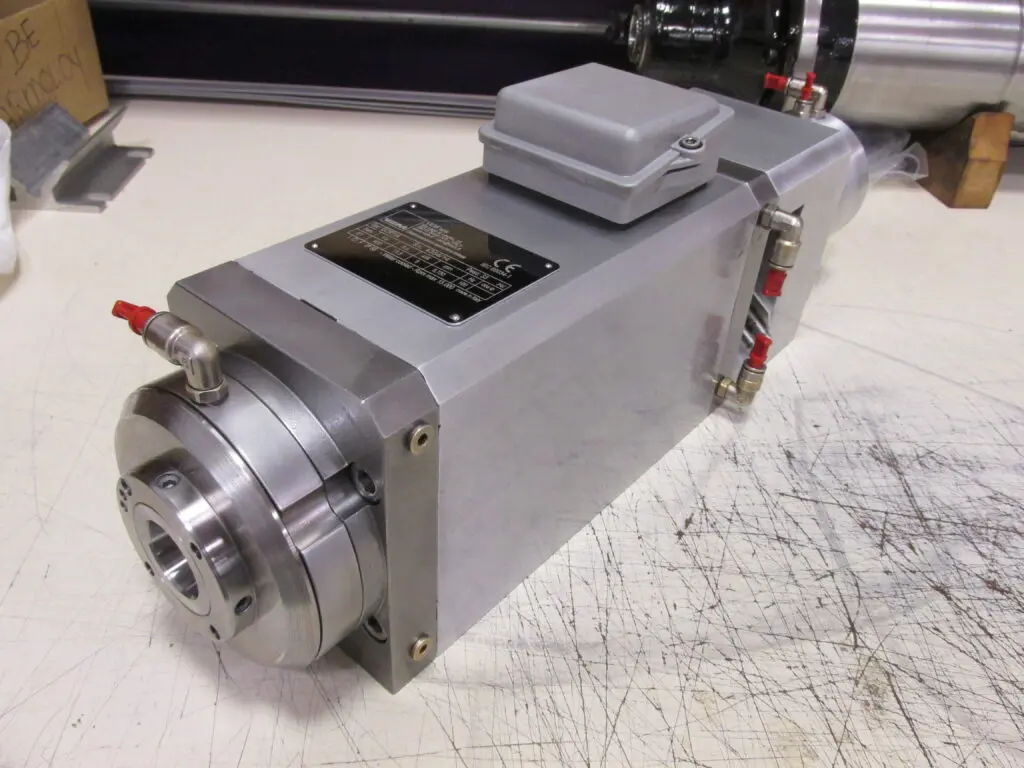
A failing spindle rarely goes from “perfect” to “destroyed” overnight. In most cases, warning signs appear weeks—or even months—before catastrophic failure. Unfortunately, those early indicators are often ignored in the rush of daily production.
Catching spindle problems early can mean the difference between a planned repair and an unplanned shutdown, scrapped parts, and a six-figure replacement.
Below are the most common signs your CNC spindle needs professional attention—before it’s too late.
1. Unusual Noise During Operation
Grinding, whining, rumbling, or knocking noises are often the first indicator of bearing wear.
What it usually means:
- Bearing race damage
- Improper preload
- Lubrication failure
If noise changes with RPM, load, or temperature, stop and investigate. Running a noisy spindle rarely “fixes itself.”
2. Excessive Vibration or Chatter
If surface finishes degrade or chatter appears where it didn’t before, your spindle may no longer be running true.
Possible causes include:
- Bearing fatigue
- Imbalance in the rotating assembly
- Taper damage
- Tool retention issues
Even small increases in vibration can dramatically shorten spindle life if ignored.
3. Rising Operating Temperatures
A spindle that runs hotter than normal—even if still within alarm limits—is sending a warning.
Common reasons:
- Failing bearings
- Lubrication breakdown
- Coolant or air/oil system issues
Heat accelerates wear exponentially. What starts as a minor temperature rise can quickly escalate into seized bearings.
4. Poor Tool Retention or Pull Stud Wear
If tools are slipping, fretting, or showing unusual pull stud wear, the problem may not be the toolholder—it could be the drawbar or retention system.
Symptoms include:
- Inconsistent tool clamping force
- Tool pull-out during heavy cuts
- Taper fretting
Tool retention failures often lead directly to taper damage if not addressed early.
5. Increased Runout or Accuracy Issues
Parts suddenly out of tolerance? Seeing issues with concentricity or repeatability?
This may indicate:
- Bearing degradation
- Shaft wear
- Taper damage
Once runout exceeds acceptable limits, continued operation often causes secondary damage that increases repair cost.
6. Coolant or Contamination Inside the Spindle
Coolant ingress is one of the fastest ways to destroy a spindle.
Warning signs:
- Milky or discolored lubricant
- Corrosion during inspection
- Sudden bearing noise after washdown
Seal failures should be addressed immediately—coolant-contaminated bearings deteriorate rapidly.
7. Encoder or Feedback Alarms
Intermittent encoder faults, spindle orientation errors, or speed feedback alarms can indicate internal electrical or mechanical issues.
Potential causes:
- Encoder failure
- Heat damage
- Bearing drag affecting motor load
Ignoring these alarms can lead to unexpected shutdowns or drive damage.
8. Frequent Tool or Bearing Failures
If you’re replacing tooling or spindle-related components more often than normal, the spindle may be the root cause—not the consumables.
A degrading spindle places abnormal loads on:
- Tools
- Toolholders
- Drawbars
- Bearings
This creates a costly domino effect.
Why Early Spindle Repair Matters
Addressing spindle issues early typically results in:
- Lower repair costs
- Shorter downtime
- Preservation of the taper and shaft
- Avoidance of complete spindle replacement
Waiting until failure often means extensive internal damage—or a spindle that’s no longer economically repairable.
When to Call a Spindle Repair Specialist
If you notice any combination of the signs above, it’s time to schedule a professional spindle evaluation. A qualified spindle repair provider can inspect, test, and determine whether a rebuild, bearing replacement, or balance correction is needed.
Early intervention protects your machine, your schedule, and your bottom line.
Final Tip
If your shop relies on tight tolerances, high spindle speeds, or long production runs, preventative spindle inspections should be part of your maintenance strategy—not an emergency reaction.