

Robotic Trimming When Cut Quality Becomes Inconsistent
The Weiss RS 30 is engineered for robotic machining applications where low mass, dynamic balance, and stability during motion are critical. When internal conditions begin to change, performance rarely fails all at once. Instead, users notice subtle shifts—cut quality varying by robot orientation, vibration appearing during motion but not at idle, or finish consistency declining over time—while the spindle itself continues to sound normal. These patterns often point to bearing or balance-related changes inside the spindle rather than robot calibration or programming issues.

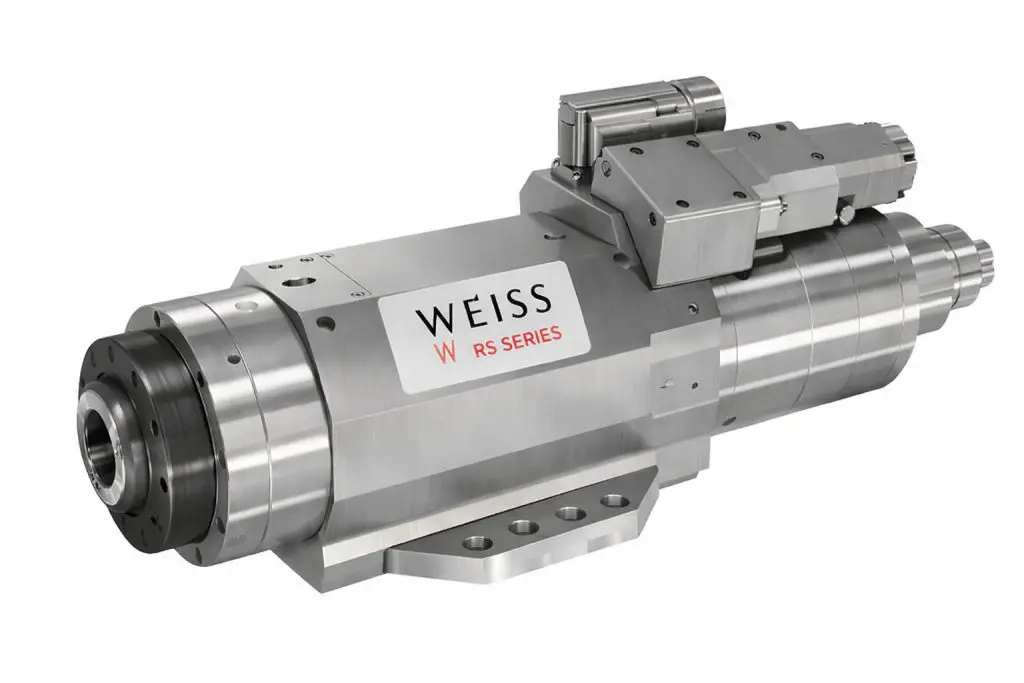
How the Weiss RS 30 Is Used in Robotic Applications
The RS 30 is commonly integrated into robot-mounted machining systems performing:
- Robotic trimming of composites
- Aluminum routing and finishing
- Deburring and edge finishing
- Lightweight milling and contouring
- Multi-axis robotic operations with frequent orientation changes
Because the RS 30 is designed for low payload impact, it is especially sensitive to internal balance and bearing condition as the robot accelerates and decelerates.
Early Robotic Symptoms Seen in RS 30 Spindles
Inconsistent cut quality by robot position
Users often report:
- Clean cuts in some orientations
- Tear-out, chatter, or rough edges in others
- Issues tied to robot posture, not toolpath
This behavior often reflects internal spindle stiffness or preload changes amplified by robot motion.
Vibration during motion, not at idle
A common RS 30 pattern:
- Spindle runs smoothly when stationary
- Vibration appears only while the robot is moving
- Idle spindle tests show no obvious issues
In robotic environments, small spindle imbalance is magnified by arm movement.
Gradual loss of repeatability
Over time:
- Edge locations vary slightly
- Trim quality becomes less predictable
- Operators compensate by slowing programs
These are often early indicators of bearing wear, not robot accuracy loss.
What’s Typically Happening Inside the RS 30
Bearing wear and dynamic balance sensitivity
In lightweight robotic spindles:
- Even minor bearing changes affect balance
- Dynamic forces from robot motion amplify instability
- Preload shifts reduce stiffness under changing orientation
Because the RS 30 is designed for motion, internal wear shows up sooner in robotic cells than on fixed machines.
Why RS 30 Issues Are Often Misdiagnosed
In robotic machining, symptoms are often blamed on:
- Robot calibration or backlash
- Toolpath smoothing or acceleration limits
- End-of-arm tooling rigidity
While these factors matter, repeated cut-quality issues that correlate with motion rather than speed alone often point back to spindle condition.
Repair Options for Weiss RS 30 Spindles
Motion-focused spindle evaluation
A proper evaluation can:
- Assess bearing condition under dynamic conditions
- Identify balance issues that appear only during movement
- Prevent unnecessary robot recalibration efforts
Precision bearing rebuild and dynamic balancing
When wear is confirmed:
- Bearings are replaced to OEM-level specifications
- Preload is restored for robotic duty
- Dynamic balance is verified for stability during motion
The result is consistent cut quality across all robot orientations.
Repair vs Replacement in Robotic Cells
Because robotic systems amplify spindle behavior:
- Running through early symptoms increases scrap quickly
- Compensation often reduces cycle time efficiency
- Delayed repair can affect both spindle and robot performance
In many cases, early spindle repair restores robotic consistency at far lower cost than replacement or cell rework.
Manufacturer-Recommended Maintenance for Weiss RS Spindles
According to manufacturer guidance for Weiss robotic spindles, maintaining performance depends on practices tailored to dynamic applications.
Manufacturer recommendations generally emphasize:
- Proper warm-up before production
- Avoiding shock loads during engagement and retraction
- Maintaining clean lubrication and cooling conditions
- Monitoring cut quality trends rather than waiting for alarms
- Investigating changes early, especially in robotic cells
👉 Reference:
Weiss – Downloads & Documentation
https://www.weiss-spindle.com/en/news-media/downloads/
Users can locate the appropriate manuals and technical resources by spindle series and model within the OEM documentation library.
Preventative Practices That Help RS 30 Spindles Last Longer
To extend service life in robotic machining:
- Track cut quality relative to robot motion and orientation
- Avoid masking instability by permanently slowing programs
- Address balance- or motion-related changes early
In robotic applications, small spindle issues scale quickly.
Illustrations are representative and used for educational purposes; actual spindle configurations may vary.