-
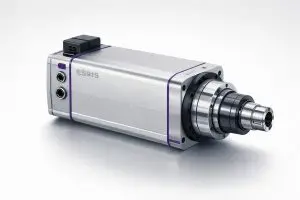
HSD ES915 Spindle Repair: When Heat and High RPM Start Affecting Performance
If you’re researching HSD ES915 spindle repair, you’re likely dealing with performance issues that appear only under demanding conditions. The spindle may run smoothly at lower speeds, yet begin to vibrate, lose finish quality, or generate excess heat when operated near its upper RPM range. This page focuses on that specific behavior—because ES915 issues are…
-
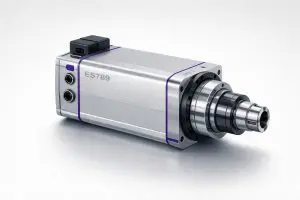
HSD ES789 Spindle Repair: When Finish Quality Declines Without Obvious Vibration
If you’re looking into HSD ES789 spindle repair, you’re likely dealing with a frustrating problem: finish quality is getting worse, but the spindle doesn’t sound bad and nothing obvious appears “broken.” Edges lose sharpness, surfaces feel inconsistent, and small defects begin to appear even though tooling and programs haven’t changed. This is a common ES789…
-
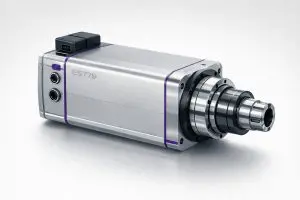
HSD ES779 Spindle Repair: When Tool Changes Start Affecting Cut Quality
If you’re researching HSD ES779 spindle repair, chances are you’re dealing with something subtle—but disruptive. Unlike spindles that fail with constant noise or vibration, the ES779 often creates problems that show up between tool changes. Finish quality varies from tool to tool, vibration feels inconsistent, and it becomes difficult to tell whether the issue is…
-
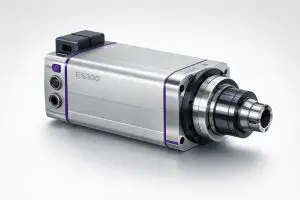
HSD ES330 Spindle Repair: Symptoms, Failures, and Repair Options
If you’re searching for HSD ES330 spindle repair, you’re usually trying to answer one of three questions: This page focuses on those real-world decisions—because most ES330 problems show up as process problems first (finish, chatter, tool life), then become mechanical problems if ignored. Atlanta Precision Spindles supports high-speed spindle repair with contamination control, correct bearing…
-
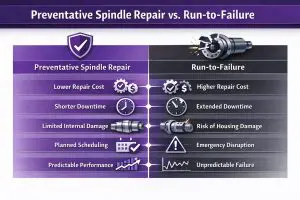
Why Wait Until Failure?
The Hidden Cost of Running a CNC Spindle to the Breaking Point In many shops, spindle repair only happens after failure. The machine alarms, production stops, and the spindle gets pulled in an emergency. While this approach may feel unavoidable, it is also one of the most expensive ways to manage CNC spindle performance. At…
-
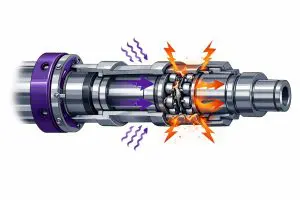
How Vibration Accelerates CNC Spindle Bearing Failure
Understanding the Hidden Damage Inside the Spindle Vibration is one of the most destructive forces inside a CNC spindle. While contamination often starts the failure process, vibration rapidly accelerates bearing wear and shortens spindle life. Even small increases in vibration can multiply internal stress, leading to heat buildup, lubrication failure, and premature bearing damage. This…
-
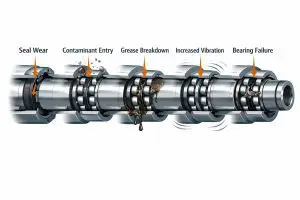
How Spindle Contamination Leads to Bearing Failure
A Step-by-Step Look Inside CNC Spindle Damage CNC spindle failure rarely happens all at once. In most cases, damage begins with microscopic contamination and progresses gradually until vibration, heat, and bearing failure become impossible to ignore. Understanding this progression helps operators identify problems early and avoid costly downtime. This diagram illustrates the five most common…
-
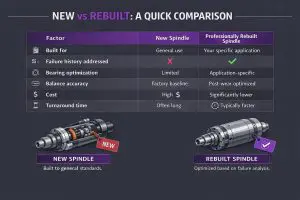
Why Rebuilt Spindles Often Outperform New Ones
New Vs Rebuilt Spindle: A Comparison
-
CNC Milling Spindle Repair
NC milling spindles are the heart of precision machining. When a spindle begins to wear, machine performance, surface finish, and dimensional accuracy are all affected. At Atlanta Precision Spindles, we specialize in CNC milling spindle repair, restoring spindles to OEM—or better—performance while minimizing downtime and extending spindle life. Whether your equipment uses AC or DC…
-
Contamination is the silent spindle killer.
Contamination Control in Precision Spindles How Microscopic Contaminants Cause Major Spindle Failures — and How to Prevent Them In precision grinding and high-accuracy machining, spindle failures rarely begin with a dramatic event. Instead, they start quietly—often with contamination that enters the spindle unnoticed and accelerates wear from the inside out. At Atlanta Precision Spindles, contamination-related…
For Spindle Repair Call: (678) 225-7855