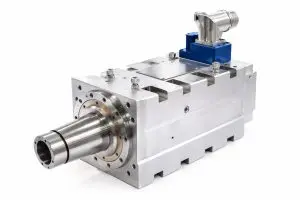
Kitamura Spindle Repair: Preserving Sub-4 Micron Accuracy and High-Speed Performance
Kitamura machining centers are known worldwide for their exceptional precision, rigidity, and thermal stability. At the heart of that performance is the spindle. Designed to deliver sub-4 micron accuracy and sustained high-speed operation exceeding 20,000 RPM on many models, Kitamura spindles are engineered for tight tolerances, fast cycle times, and long-term repeatability.
However, even the most advanced spindle is a wear component. Without proper maintenance and timely repair, spindle degradation can quietly erode accuracy, increase cycle times, and compromise surface finishes. Professional Kitamura spindle repair plays a critical role in protecting peak machine performance and maximizing the return on your investment.
Why the Spindle Is Critical to Kitamura Performance
Kitamura machines are built around the idea that accuracy and speed should coexist. Their spindles are precision-balanced assemblies designed to:
-
Maintain sub-4 micron runout accuracy
-
Operate reliably at 15,000–20,000+ RPM
-
Deliver consistent torque across a wide speed range
-
Support aggressive cutting strategies and reduced cycle times
Any loss of spindle integrity directly impacts these advantages. Bearing wear, thermal growth issues, or imbalance at high RPM can introduce vibration, chatter, and dimensional drift—often before catastrophic failure occurs.
High-Speed Spindles Demand Proactive Maintenance
High-speed spindle operation amplifies even minor defects. At 20,000 RPM, small changes in bearing preload, lubrication quality, or shaft balance can lead to:
-
Increased heat generation
-
Accelerated bearing wear
-
Surface finish degradation
-
Tool life reduction
-
Longer cycle times due to conservative feeds and speeds
Routine spindle maintenance and early-stage repair help prevent these issues, keeping Kitamura machines operating at their intended performance envelope rather than being “dialed back” to compensate for wear.
Common Causes of Kitamura Spindle Degradation
Despite their robust design, Kitamura spindles are still affected by real-world operating conditions. The most common causes of spindle failure include:
Bearing Wear and Fatigue
High-speed ceramic or hybrid bearings are designed for precision, but contamination, lubrication breakdown, or excessive cutting loads will shorten their service life.
Thermal Stress
Extended high-RPM operation without proper cooling or lubrication control can lead to thermal expansion, preload loss, and accuracy drift.
Imbalance and Vibration
Tool crashes, improper toolholders, or worn drawbar systems can introduce imbalance, which becomes more destructive as spindle speed increases.
Contamination
Coolant ingress or airborne debris can damage bearing races and lubrication systems, especially in high-speed applications.
How Professional Kitamura Spindle Repair Restores Performance
A proper spindle repair process goes far beyond replacing bearings. Precision repair focuses on restoring the spindle to original—or better—operating condition.
Key elements of a quality Kitamura spindle repair include:
-
Complete teardown and inspection of the spindle cartridge
-
Bearing replacement using OEM-grade or equivalent high-speed bearings
-
Precision preload setting for optimal thermal and dynamic performance
-
Shaft inspection and correction to maintain sub-4 micron runout
-
High-speed dynamic balancing, often at or above operating RPM
-
Drawbar and retention system evaluation
-
Lubrication system verification
When executed correctly, spindle repair restores rigidity, reduces vibration, and allows the machine to safely return to its full RPM range.
Maintaining Sub-4 Micron Accuracy Over Time
Kitamura’s reputation for micron-level precision depends on spindle condition. Even small increases in runout or axial play can result in:
-
Out-of-tolerance parts
-
Inconsistent hole size and position
-
Poor surface finishes
-
Increased scrap rates
Routine spindle health checks—such as vibration analysis, temperature monitoring, and runout measurement—allow problems to be addressed early. Proactive repair preserves the spindle’s ability to hold sub-4 micron accuracy across long production runs.
Reduced Cycle Times Start with a Healthy Spindle
One of the biggest hidden costs of spindle degradation is longer cycle times. As spindles wear, operators often compensate by:
-
Reducing spindle speeds
-
Lowering feed rates
-
Taking lighter cuts
-
Adding finishing passes
These adjustments protect the machine—but they sacrifice productivity. A fully restored Kitamura spindle enables:
-
Confident use of high RPM
-
Stable high-feed machining
-
Aggressive toolpaths
-
Faster acceleration and deceleration
The result is shorter cycle times, improved throughput, and better utilization of the machine’s original design capabilities.
Repair vs. Run-to-Failure: The Cost Difference
Waiting until a spindle fails completely often leads to:
-
Secondary shaft or housing damage
-
Longer machine downtime
-
Emergency repair premiums
-
Missed delivery deadlines
Scheduled spindle repair or rebuild is almost always more cost-effective than catastrophic failure, especially for high-speed, high-precision spindles like those used in Kitamura machines.
Protecting Peak Performance for the Long Term
Kitamura machining centers are engineered for decades of service—but only if the spindle is maintained as carefully as the rest of the machine. Precision spindle repair ensures that accuracy, speed, and reliability remain consistent year after year.
By investing in proper spindle maintenance and timely repair, manufacturers can preserve sub-4 micron accuracy, sustain 20,000+ RPM performance, reduce cycle times, and keep Kitamura machines operating at peak efficiency.
Request a Quote
-
How to Extend the Life of SCM CNC Router Electrospindles SCM CNC router spindles are built for high-speed production, frequent…
-
When Cut Quality, Heat, or Reliability Starts to Slip SCM CNC router electrospindles are designed to deliver high-speed performance, automated…
-
Diagnosing Performance Issues in SCM CNC Electrospindles SCM electrospindles are widely used across CNC routers, aluminum machining centers, and hybrid…