
HSD ES779 Spindle Repair: When Tool Changes Start Affecting Cut Quality
If you’re researching HSD ES779 spindle repair, chances are you’re dealing with something subtle—but disruptive. Unlike spindles that fail with constant noise or vibration, the ES779 often creates problems that show up between tool changes. Finish quality varies from tool to tool, vibration feels inconsistent, and it becomes difficult to tell whether the issue is tooling or the spindle itself.
This page focuses on that specific decision—because ES779 issues are often misdiagnosed until damage becomes more serious.
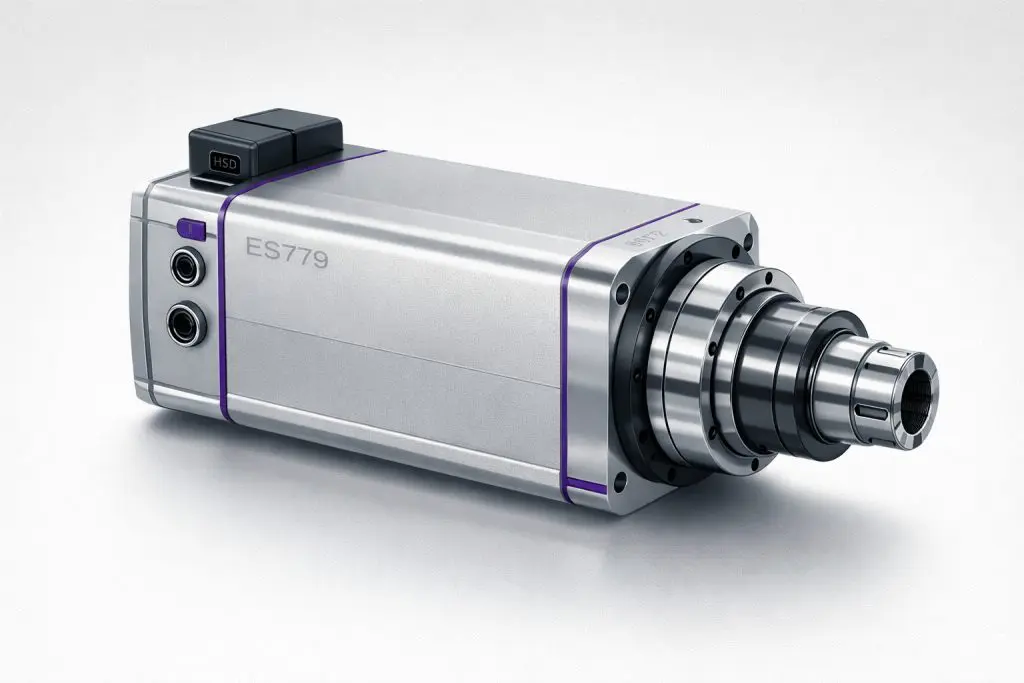
How the HSD ES779 Is Typically Used
In production environments, the ES779 is commonly paired with automatic tool change systems and used for:
- Nested-based manufacturing
- Long production runs
- Frequent tool changes per program
- Dust-heavy cutting environments
That combination places unique stress on the spindle’s bearing system and tool interface, especially over time.
Symptoms That Appear First in ES779 Spindles
Inconsistent results after tool changes
Most ES779 users don’t report constant vibration. Instead, they notice:
- One tool cuts cleanly while the next leaves visible marks
- Finish quality changes after ATC cycles
- Runout measurements vary depending on the tool loaded
Finish degradation during long runs
As runtime increases:
- Finishing passes lose consistency
- Light chatter appears intermittently
- Tool life becomes unpredictable
These symptoms often come and go—making diagnosis harder.
What’s Usually Going Wrong Inside
Bearing wear affects interface stability
In the ES779, even minor bearing wear or preload change can affect:
- How consistently tools seat
- How vibration transfers through the spindle nose
- How repeatable each tool change is
Because the spindle still “sounds normal,” this condition is frequently overlooked.
Why ES779 Problems Are Often Misdiagnosed
Most users first suspect:
- Tooling
- Collets
- Toolholders
- Programming changes
While these components matter, swapping tooling can temporarily hide spindle instability, allowing internal wear to continue unnoticed.
Repair Options: Choosing the Right Path
Targeted evaluation (often the smartest first step)
For ES779 spindles showing inconsistency rather than outright failure, evaluation can:
- Measure vibration trends
- Assess interface stability
- Identify whether bearing service is actually required
Bearing rebuild (when instability is confirmed)
When evaluation shows preload loss or bearing degradation:
- Rebuilding restores consistent tool seating
- Finish quality stabilizes
- Vibration becomes predictable again
Catching this early prevents taper and housing damage.
When Continuing to Run Becomes Expensive
Running through tool-to-tool inconsistency can lead to:
- Accelerated interface wear
- Secondary bearing damage
- Longer downtime later
What starts as a finish issue can become a full spindle rebuild if ignored.
Preventative Practices That Matter for the ES779
To extend ES779 spindle life:
- Maintain strict collet and taper cleanliness
- Monitor finish changes after tool changes
- Track vibration trends instead of reacting only to noise
ATC systems magnify small problems—early attention matters.
If your ES779 shows inconsistent finish or vibration that appears tied to tool changes, an early evaluation can help determine whether the spindle is the root cause—or if the issue lies elsewhere.
Illustration Disclaimer
Illustrations are representative and used for educational purposes; actual spindle configurations may vary.