
HSD ES929 Spindle Repair: When Aluminum Cutting Starts Causing Chatter
← Back to HSD ES Series Spindle Repair
If you’re researching HSD ES929 spindle repair, you’re often facing a very specific problem: the spindle performs acceptably in wood or plastics, but begins to chatter or vibrate noticeably when cutting aluminum or handling heavier loads.
This pattern is common with ES929 spindles and usually points to load-related stiffness loss, not just tooling or programming issues.
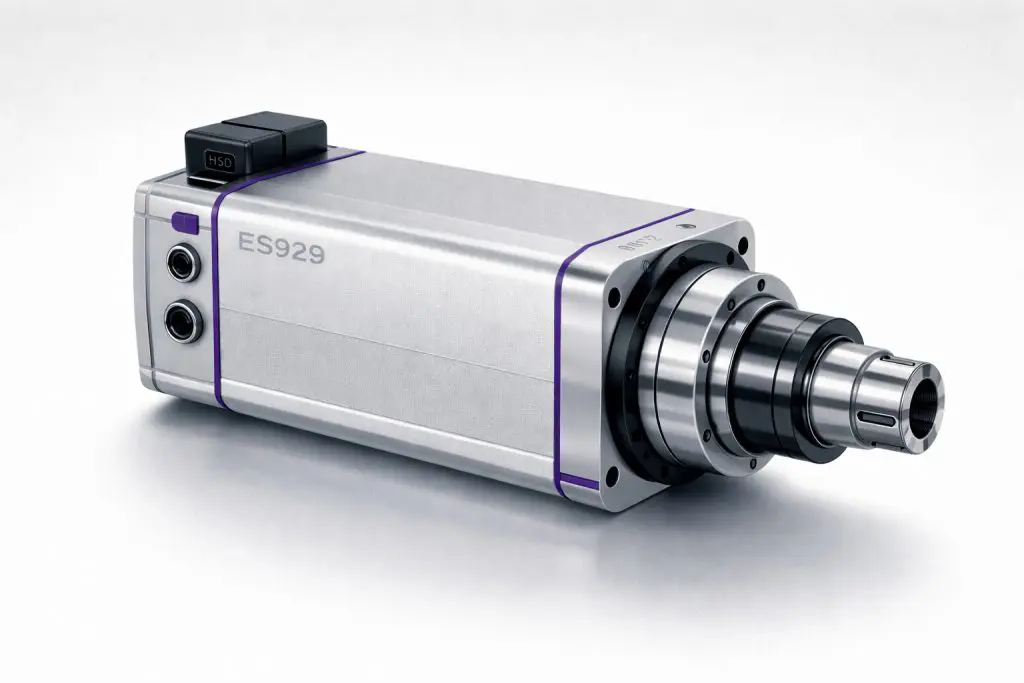
How the HSD ES929 Is Commonly Used
The ES929 is frequently used in mixed-material environments, including:
- Wood and composite machining
- Light to moderate aluminum cutting
- Production setups that alternate materials
- Machines that rely on a single spindle for multiple applications
Because of this versatility, ES929 spindles are often pushed into cutting conditions that reveal internal wear sooner.
Early Symptoms ES929 Users Notice
Chatter during aluminum or heavy cuts
Typical reports include:
- Harmonic chatter marks in aluminum
- Vibration during side milling or slotting
- Acceptable finish in wood, poor finish in metal
Rapid tool wear under load
As instability increases:
- Tools dull or fail faster in aluminum
- Cutting forces feel inconsistent
- Productivity drops during metal jobs
What’s Typically Happening Inside the ES929
Loss of stiffness due to bearing wear
As bearings wear:
- Radial stiffness decreases
- Cutting forces excite vibration more easily
- Chatter appears first under higher loads
This is why problems often show up in aluminum before other materials.
Why ES929 Aluminum Issues Are Often Misdiagnosed
Most users initially blame:
- Tool geometry
- Feed and speed selection
- Machine rigidity
While these factors matter, repeated chatter despite parameter changes often points to internal spindle wear.
Repair Options for ES929 Spindles
Load-focused evaluation
A targeted evaluation can:
- Assess spindle stiffness under load
- Identify bearing wear early
- Prevent secondary damage
Bearing rebuild when stiffness loss is confirmed
When bearing degradation is present:
- Rebuilding restores rigidity
- Chatter is reduced or eliminated
- Tool life improves significantly
Why Continuing to Cut Aluminum Gets Expensive
Running aluminum jobs through a degrading spindle:
- Accelerates bearing damage
- Increases repair scope
- Raises tooling and scrap costs
Early intervention keeps repairs simpler.
Manufacturer-Recommended Maintenance for the HSD ES929
HSD’s official electrospindle documentation for the ES9XX series emphasizes maintenance practices that support bearing life and cutting stability.
Manufacturer guidance generally includes:
- Keeping the spindle taper and tool interface clean
- Monitoring spindle behavior under different cutting loads
- Ensuring clean airflow and proper cooling
- Avoiding unnecessary lubrication, as bearings are factory-lubricated for life
- Performing routine inspections before extended production runs
These recommendations align closely with field experience—load-related chatter often worsens when early stiffness changes are ignored.
👉 Reference:
HSD ES9XX Series Spindle Manual (PDF)
https://www.manualslib.com/manual/1532502/Hsd-Es915.html
Preventative Practices That Help ES929 Spindles Last Longer
To reduce repeat issues:
- Monitor chatter trends during aluminum cutting
- Avoid pushing worn spindles into heavy cuts
- Maintain clean tooling interfaces to reduce added load
Addressing load-related symptoms early protects spindle rigidity.
If your ES929 performs well in wood but struggles in aluminum, an early spindle evaluation can help determine whether internal stiffness loss is already developing.
Illustration Disclaimer
Illustrations are representative and used for educational purposes; actual spindle configurations may vary.
Related Pages
- HSD ES939: When Vibration Appears Only at Top RPM
- HSD Spindle Bearing Guide
- Back to HSD ES Series overview
Ready to send in your ES929? Contact Atlanta Precision Spindles for an evaluation.