
GMN UH 100 Spindle Repair: When Size and Form Drift on Larger Bores
GMN UH 100 Spindle Repair: When Size and Form Drift on Larger Bores
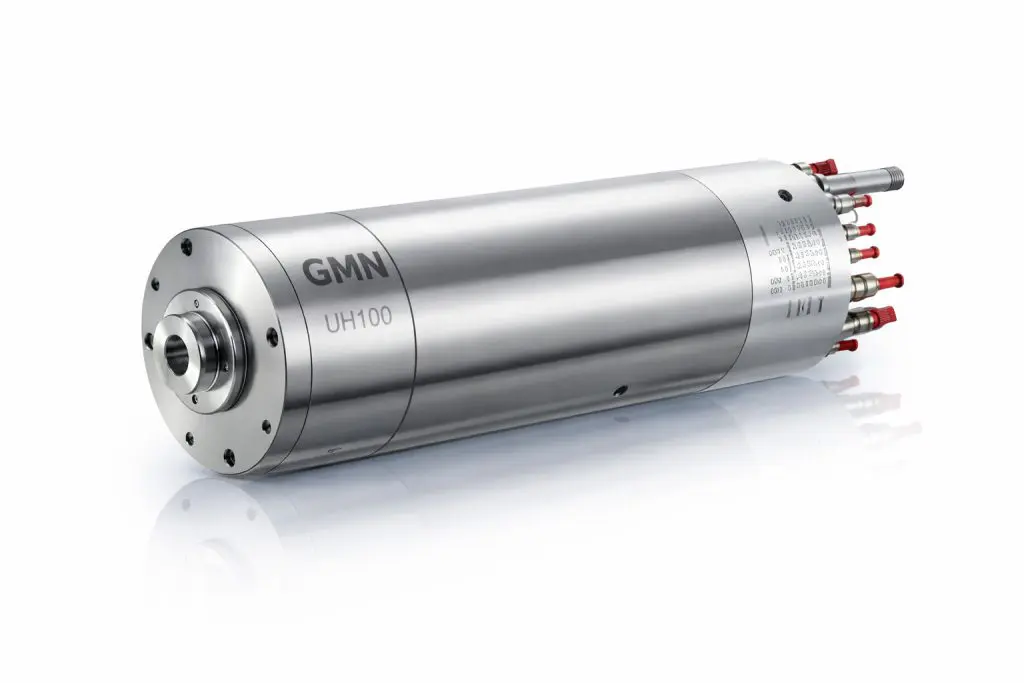
If you’re researching GMN UH 100 spindle repair, the spindle likely still runs quietly and smoothly. There’s no chatter, no obvious vibration — yet parts are no longer holding size or form, especially on larger internal diameters.
This is a common UH 100 scenario and usually indicates bearing wear affecting stiffness and geometric control, not a sudden failure.
How the GMN UH 100 Is Typically Used
The UH 100 is commonly installed in:
- Precision internal grinding machines
- Jig grinders handling larger bores
- Form-grinding applications where size and roundness are critical
- Environments measuring accuracy in microns
In these applications, spindle stiffness directly affects part geometry.
Early Symptoms Seen in UH 100 Spindles
Size instability on larger IDs
Users often report:
- Parts drifting out of size across a run
- Increased variation as bore diameter increases
- More frequent offset adjustments
Quiet operation despite accuracy loss
Unlike load-driven spindles:
- Noise remains unchanged
- Vibration is minimal or absent
- Measurement reveals the issue first
What’s Typically Happening Inside the UH 100
Bearing wear reducing stiffness
As bearings degrade:
- Radial stiffness decreases
- Axial positioning becomes less consistent
- Errors become more visible on larger diameters
Because UH spindles are built for precision, even minimal wear matters.
Why UH 100 Issues Are Often Misdiagnosed
Most users first adjust:
- Gauging methods
- Dressing routines
- Machine compensation
While these steps can help temporarily, repeated size and form issues often trace back to the spindle.
Repair Options for GMN UH 100 Spindles
Precision evaluation
A focused evaluation can:
- Assess bearing condition and alignment
- Measure internal accuracy
- Confirm whether rebuild is required
Precision bearing rebuild and requalification
When wear is confirmed:
- Bearings are replaced to OEM-level precision
- Preload and alignment are restored
- Size and form stability return
Manufacturer-Recommended Maintenance for the GMN UH Series
According to GMN’s UH-series documentation, maintaining ultra-precision performance depends on correct handling, lubrication, and operating practices.
Manufacturer guidance emphasizes:
- Maintaining proper lubrication conditions
- Allowing sufficient warm-up time
- Avoiding shock loads and improper handling
- Monitoring accuracy instead of waiting for noise
- Keeping coolant quality and temperature stable
👉 Reference:
GMN UH Series – Official OEM Documentation (PDF)
https://d10pxnrbdm1abr.cloudfront.net/wp-content/uploads/GMN-UH-Reihe_eng_0924_2-1.pdf
Preventative Practices That Help UH 100 Spindles Last Longer
To preserve accuracy:
- Track size and form trends, especially on larger IDs
- Use consistent warm-up routines
- Address small deviations early
In ultra-precision grinding, small errors grow quickly.
If your GMN UH 100 still runs quietly but no longer holds size or form on larger bores, an evaluation can help determine whether internal bearing wear is already affecting accuracy.
Illustration Disclaimer
Illustrations are representative and used for educational purposes; actual spindle configurations may vary.