
Posts by Atlanta Precision Spindles
Spindles for Robotic Machining & Trimming
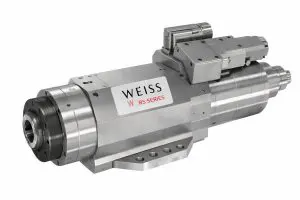
How Side Load, Reach, and Duty Cycle Expose Spindle Wear Robotic machining and trimming introduce challenges that traditional CNC machines rarely face. Long reach, changing leverage, and continuous side loading place non-traditional stresses on the spindle. As a result, spindle wear in robotic cells often appears as finish inconsistency, tool life loss, or heat—not loud…
Read MoreSpindles for 5-Axis Machining
How Orientation, Load Direction, and Thermal Behavior Expose Spindle Wear 5-axis machining places unique demands on a spindle. As the head tilts and rotates, load direction, leverage, and thermal behavior change continuously. Because of this, spindle wear in 5-axis machines often appears only at certain angles or orientations, not everywhere at once. This page explains…
Read MoreSpindles for Grinding
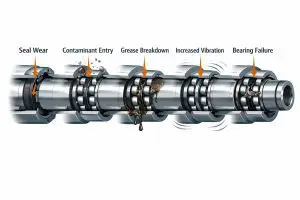
How Finish Quality, Thermal Stability, and Load Reveal Spindle Condition Grinding spindles operate under continuous contact, sustained radial load, and extremely tight surface-finish requirements. Unlike milling or routing spindles, grinding spindles rarely show dramatic vibration or noise early on. Instead, finish degradation, heat buildup, and process inconsistency are usually the first indicators of spindle wear.…
Read MoreSpindles for CNC Routing
How Duty Cycle, Side Load, and Finish Quality Reveal Spindle Wear CNC routing spindles operate in a very different world than milling or grinding spindles. They are often run for long hours, under constant side load, and across a wide range of materials—wood, composites, plastics, and aluminum. Because of this, routing spindles rarely fail catastrophically.…
Read MoreSpindles for Steel Milling
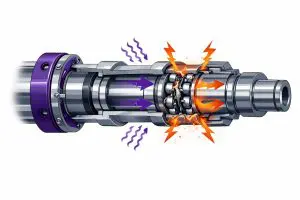
How Torque, Stiffness, and Thermal Control Drive Performance Steel milling places sustained mechanical and thermal demands on a spindle. Unlike high-speed finishing, steel cutting exposes weakness through load, stiffness, and heat, often long before alarms or catastrophic failure occur. This page explains which spindle designs are commonly used for steel milling, how wear typically presents,…
Read MoreSpindles for High-Speed Milling
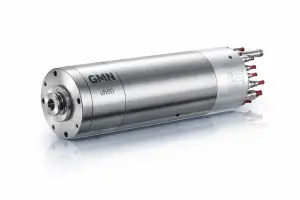
How Speed, Balance, and Thermal Stability Shape Performance—and Failure High-speed milling places very different demands on a spindle than general machining or heavy cutting. In these applications, spindle condition directly affects surface finish, tool life, and dimensional accuracy, often long before alarms or noise appear. This page explains how high-speed milling spindles behave, what early…
Read MoreIs It the Spindle or the Machine?
A Diagnostic Guide for Matsuura CNC Equipment When machining results change on a Matsuura machine, the cause isn’t always where it looks like it is. Surface finish, vibration, heat, and accuracy drift can originate either from the spindle assembly or from machine components (axes, ballscrews, servo systems, control issues) — and the best way to…
Read MoreMatsuura Spindle Preventative Maintenance
Catching Performance Issues Early—Before Downtime or Scrap Matsuura machines are built for long-term accuracy, thermal stability, and continuous production. In many cases, the machine itself remains mechanically sound even as machining results begin to change. That’s because spindle wear develops gradually, especially in high-speed and precision applications. Preventative maintenance for Matsuura spindles focuses on recognizing…
Read MoreOmlat D-Drive Spindles for Steel Milling
Direct-Drive Milling Spindles for Stiffness, Torque Density, and Thermal Control Omlat designs D-Drive (direct-drive) spindles for milling applications where steel cutting, stiffness, and torque consistency are more critical than belt isolation or ultra-high speed. Unlike belt-driven spindles, D-Drive spindles integrate the motor directly into the spindle assembly. This eliminates belts and pulleys, allowing for more…
Read MoreOmlat BELT-M Spindles for Milling
Omlat manufactures the BELT-M spindle family for milling and material-removal applications where torque delivery, mechanical robustness, and process flexibility are more important than extreme rotational speed. Unlike grinding-focused spindle families, BELT-M spindles are designed to handle intermittent cutting loads, changing engagement conditions, and a broader range of tooling while maintaining stable performance. What the BELT-M…
Read More