
GMN HCS 170 Spindle Repair: When Accuracy Shifts Under Load
If you’re researching GMN HCS 170 spindle repair, the spindle likely still sounds smooth and runs without obvious vibration — yet accuracy degrades as grinding load or cycle time increases.
This is a common HCS 170 pattern and usually points to thermal and bearing-related instability under load, not basic setup issues.
How the GMN HCS 170 Is Commonly Used
The HCS 170 is typically used for:
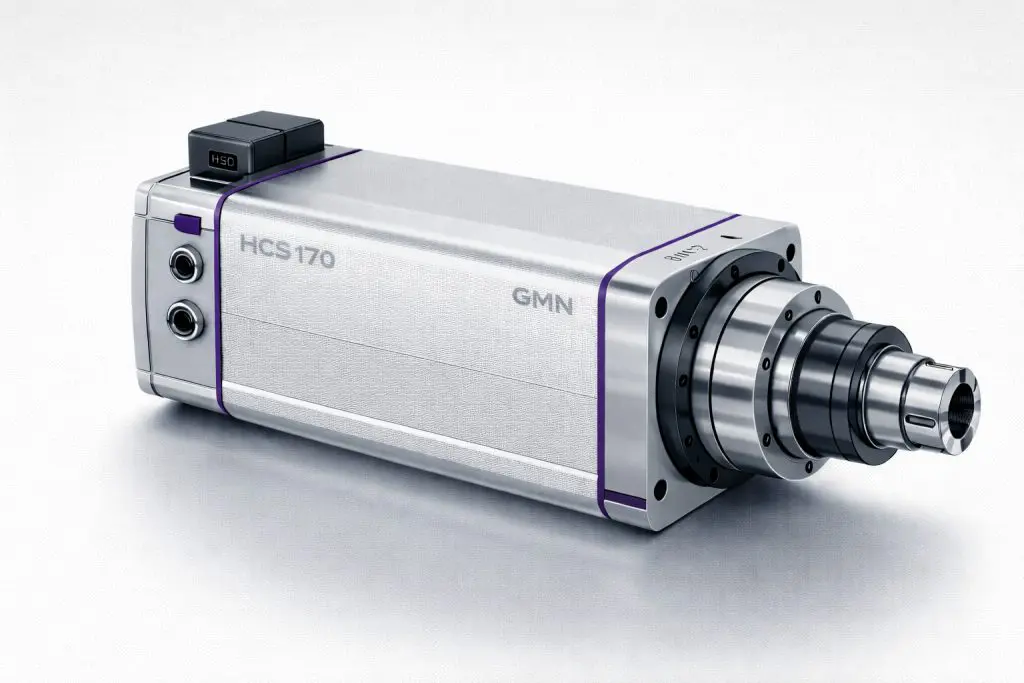
Higher-load internal and external grinding
- Production grinding with longer cycle times
- Applications where material removal rates exceed finishing-only work
These conditions place greater thermal and mechanical stress on the spindle.
Early Symptoms Seen in HCS 170 Spindles
Accuracy loss during heavy grinding
Users commonly report:
- Parts holding size early in the cycle but drifting later
- Increased compensation required as load increases
- Geometry changing more with aggressive passes
Stable behavior at light load
Early on:
- Finishing passes may look acceptable
- Problems appear primarily during rough or semi-finish grinding
- Noise and vibration remain minimal
What’s Typically Happening Inside the HCS 170
Heat-driven bearing instability
As bearings wear:
- Friction increases under load
- Heat buildup accelerates
- Shaft growth becomes less predictable
This directly affects grinding accuracy.
Why HCS 170 Issues Are Often Misdiagnosed
Most users first adjust:
- Coolant flow or temperature
- Grinding parameters
- Machine offsets
While these can help temporarily, repeated load-dependent drift often indicates internal spindle wear.
Repair Options for GMN HCS 170 Spindles
Load-focused evaluation
A proper evaluation can:
- Correlate temperature rise with accuracy loss
- Identify bearing wear under load
- Prevent unnecessary machine modifications
Precision bearing rebuild
When bearing wear is confirmed:
- Bearings are replaced and correctly preloaded
- Thermal stability improves
- Accuracy under load is restored
Why Continuing to Compensate Gets Expensive
Chasing size drift through offsets:
- Increases scrap and inspection time
- Masks spindle deterioration
- Leads to more extensive repairs later
Precision spindles rarely fail suddenly — they fade under stress.
Manufacturer-Recommended Maintenance for the GMN HCS 170
GMN’s documentation for high-speed grinding spindles emphasizes practices that preserve thermal stability and bearing life under load.
Manufacturer guidance generally includes:
- Maintaining correct lubrication conditions
- Allowing proper warm-up before high-load grinding
- Monitoring temperature and dimensional stability
- Avoiding excessive grinding forces for extended periods
- Inspecting spindle behavior regularly rather than relying on noise
For full specifications and official guidance, always consult GMN’s documentation.
👉 Reference:
GMN High-Speed Grinding Spindle Documentation
https://www.gmn.de/en/products/spindles/high-speed-spindles/
Preventative Practices That Help HCS 170 Spindles Last Longer
To extend service life:
- Track size drift relative to grinding load
- Maintain consistent warm-up routines
- Address thermal instability early
In production grinding, load reveals problems faster than time.
If your GMN HCS 170 holds tolerance at light load but drifts during heavier grinding, an evaluation can help determine whether internal wear is already affecting thermal stability.
Illustration Disclaimer
Illustrations are representative and used for educational purposes; actual spindle configurations.