
HSD ES330 Spindle Repair: Symptoms, Failures, and Repair Options
If you’re searching for HSD ES330 spindle repair, you’re usually trying to answer one of three questions:
- “Is my ES330 actually failing—or is it something else (tooling, collet, balance, parameters)?”
- “If it is the spindle, what’s the likely failure and what will it do to my cut quality?”
- “Do I need a full rebuild, or can I fix this with a targeted service to avoid downtime?”
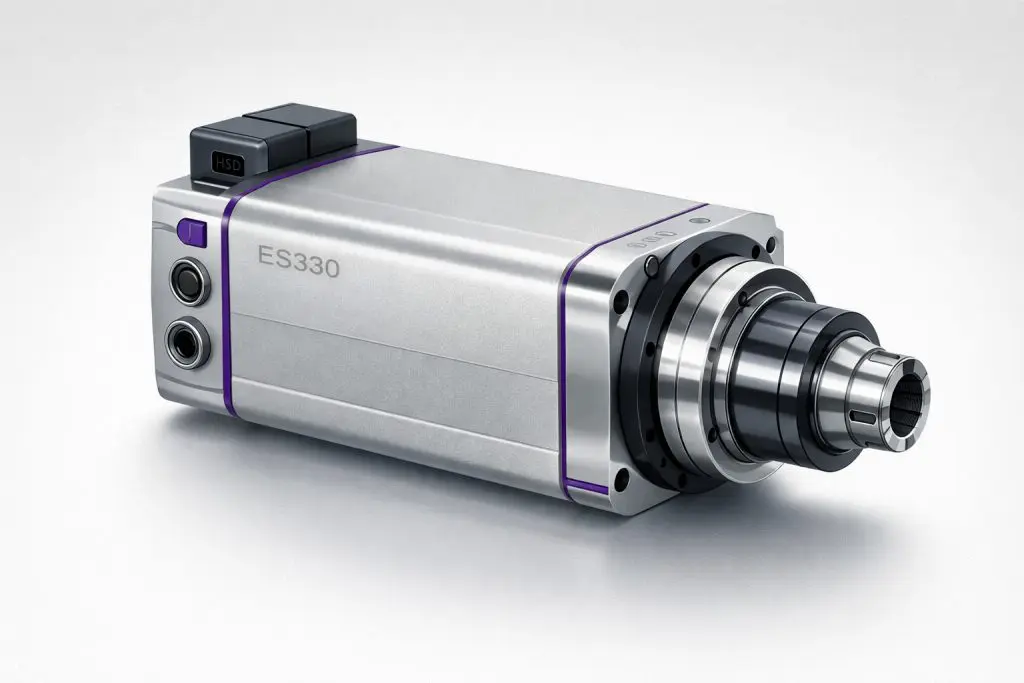
This page focuses on those real-world decisions—because most ES330 problems show up as process problems first (finish, chatter, tool life), then become mechanical problems if ignored.
Atlanta Precision Spindles supports high-speed spindle repair with contamination control, correct bearing practices, and verification testing—so repaired spindles return to stable cutting, not just “spinning again.”
What the HSD ES330 Is Typically Used For
In the field, ES330 units commonly appear on CNC routers and nested-based manufacturing setups where the spindle sees:
- Long run times (production shifts)
- Frequent tool changes (if ATC-equipped)
- Dust-heavy environments (wood/MDF/composites)
- Occasional aluminum/plastics work depending on the shop
That usage pattern matters, because it drives the most common failure modes: bearing wear, contamination ingress, and heat-related preload changes.
Symptoms: What You Notice First
1) Cut quality changes before the spindle “sounds bad”
Most ES330 users don’t start with a loud failure. They start with:
- Slightly worse edge finish on MDF/plywood
- New tool marks on finishing passes
- Chatter that appears “randomly” at certain RPM bands
- A sudden drop in tool life, especially on compression/spiral tooling
Why it happens: small increases in runout or vibration make the tool cut unevenly. The machine still runs, but quality drifts.
2) Heat and smell show up during longer cycles
Watch for:
- Spindle nose runs hotter than usual
- Heat spikes at higher RPM
- A “hot electrical” smell on electrospindles (don’t ignore this)
Why it happens: bearing friction rises as lubrication degrades or preload shifts.
3) Noise that wasn’t there before
Common descriptions:
- High-pitched whine that grows over days/weeks
- Rumbling that changes with RPM
- Clicking or intermittent scraping sounds (stop and inspect immediately)
Common Failures: What’s Usually Going On Inside
Bearing wear or preload loss (most common)
What you see: vibration, noise, heat, finish issues.
Why it fails: high duty cycle + speed + normal wear, accelerated by dust or heat.
Contamination past seals
Wood dust and fine particulate are relentless. Even “minor” contamination can:
- Break down grease
- Create abrasive wear in the bearing set
- Accelerate heat and vibration
Tooling interface issues that mimic spindle failure
Before you assume the ES330 needs a rebuild, many shops should check:
- Collet condition / collet nut wear
- Toolholder interface (if applicable)
- Taper cleanliness
- Drawbar/grip consistency (ATC setups)
A worn collet can look like a worn spindle because it produces the same symptom: runout.
Repair Options: The Right Fix Depends on What You’re Trying to Prevent
Option A: Targeted service (when caught early)
Best for:
- Early vibration or finish drift
- Minimal heat issues
- No evidence of secondary damage
Typical scope:
- Inspection of bearing condition indicators
- Seal/interface evaluation
- Cleaning/contamination assessment
- Verification testing to determine if a rebuild is truly needed
Why users choose this: it answers “Do I need a rebuild?” with data, not guesswork.
Option B: Bearing rebuild (common “fix it right” path)
Best for:
- Persistent vibration bands
- Heat buildup at operating RPM
- Noise that has progressed beyond “slight”
Typical scope:
- Full disassembly and inspection
- Component cleaning and contamination control
- Bearing replacement with correct preload practices
- Balancing/verification testing appropriate to operating speeds
Outcome users want: stable finish, predictable tool life, and fewer “mystery” scrap events.
Option C: Repair + reliability upgrades (when downtime is expensive)
Best for:
- High utilization production shops
- Frequent tool changes (ATC) and dust-heavy cutting
- Repeat bearing failures historically
Common upgrade themes:
- Higher-performance bearing selections (application-dependent)
- Improved contamination prevention practices (shop + spindle handling)
- Process tuning to reduce vibration excitation (speed ranges/feed strategy)
When to Stop Running It
If any of these are true, it’s usually cheaper to stop and evaluate now:
- Noise becomes clearly audible over the machine
- Heat rises sharply compared to baseline
- Finish issues spread across tools and programs
- You see a pattern of tool breakage that didn’t exist before
Continuing to run can turn a straightforward bearing repair into secondary damage (journals, housings, taper/interface surfaces).
Preventative Practices That Actually Help ES330 Users
These are the long-term behaviors that reduce repeat failures (and show up in long-tail searches like “how to extend HSD spindle life”):
- Keep the taper/collet system clean (dust + clamping surfaces = runout)
- Track vibration/finish changes as an early warning system
- Control compressed air quality (dirty air can push contamination where you don’t want it)
- Avoid “problem RPM bands” once identified (some setups excite resonance)
- Use tooling that matches material + chipload (reduces heat and load spikes)
Atlanta Precision Spindles can help you interpret symptom patterns so you don’t rebuild unnecessarily—but also don’t run to failure.
If your ES330 shows early signs (finish drift, heat, vibration), a short evaluation now often prevents bigger downtime later. Atlanta Precision Spindles can help confirm whether you’re looking at a collet/tooling issue, a balance/vibration issue, or true internal spindle wear.