
HSD ES789 Spindle Repair: When Finish Quality Declines Without Obvious Vibration
If you’re looking into HSD ES789 spindle repair, you’re likely dealing with a frustrating problem: finish quality is getting worse, but the spindle doesn’t sound bad and nothing obvious appears “broken.” Edges lose sharpness, surfaces feel inconsistent, and small defects begin to appear even though tooling and programs haven’t changed.
This is a common ES789 scenario—and one that’s easy to overlook until damage becomes more expensive.
How the HSD ES789 Is Commonly Used
The ES789 is frequently used for:
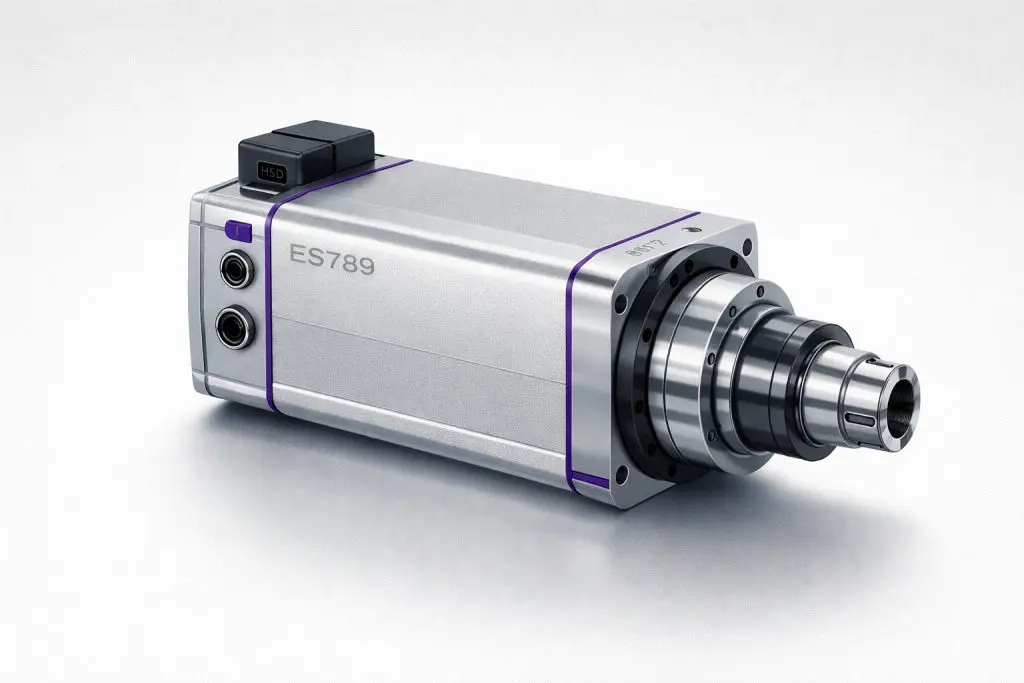
The ES789 is frequently used for:
- Finishing passes in nested-based manufacturing
- Long production shifts
- MDF, plywood, laminates, and plastics
- Applications where surface quality matters as much as speed
Because of this role, the ES789 is often pushed into continuous high-speed finishing, where even small instability becomes visible in the workpiece.
- Finishing passes in nested-based manufacturing
- Long production shifts
- MDF, plywood, laminates, and plastics
- Applications where surface quality matters as much as speed
Because of this role, the ES789 is often pushed into continuous high-speed finishing, where even small instability becomes visible in the workpiece.
Symptoms That Appear First in ES789 Spindles
Gradual finish degradation
Most ES789 users report:
- Slight tearing or fuzzing on MDF edges
- Finish that looks acceptable early in the shift but worsens over time
- Minor surface defects that don’t appear consistently
Lack of obvious noise or alarms
Unlike more severe spindle failures:
- Noise may remain minimal
- Vibration may not be felt by hand
- Problems appear only in the cut
This makes diagnosis difficult without targeted evaluation.
What’s Typically Happening Inside the ES789
Micro-vibration from bearing surface fatigue
As bearings wear, they don’t always fail loudly. Instead:
- Small surface defects create micro-vibration
- Vibration transfers directly to the cutting edge
- Finish quality degrades before sound or heat becomes obvious
By the time noise appears, wear has often progressed significantly.
Why Finish Problems Are Often Misdiagnosed
Most users first assume:
- The tool is dull
- Feed and speed need adjustment
- Material quality changed
While these factors matter, repeated tool changes that temporarily improve finish often delay recognition of a spindle issue.
Repair Options for ES789 Spindles
Evaluation tied to finish quality
A focused evaluation can:
- Correlate vibration with finish defects
- Identify bearing wear before major damage
- Confirm whether rebuild is necessary
Bearing rebuild when instability is confirmed
When bearing wear is verified:
- Rebuilding restores cutting stability
- Finish quality becomes consistent again
- Tool life improves noticeably
Early rebuilds are typically simpler and faster.
Why Continuing to Run Gets Expensive
Running through finish degradation can:
- Accelerate bearing wear
- Increase interface stress
- Turn a straightforward repair into a larger rebuild
Finish problems are often the first and cheapest warning sign.
Preventative Practices That Help ES789 Spindles Last Longer
To reduce repeat issues:
- Monitor finish trends across shifts, not just single jobs
- Keep cutting loads consistent during finishing
- Avoid running extended periods in known vibration bands
Small adjustments early prevent larger failures later.
If your ES789 is producing inconsistent finish despite tooling and program changes, an early spindle evaluation can determine whether internal wear is already affecting performance.
Illustration Disclaimer
Illustrations are representative and used for educational purposes; actual spindle configurations may vary.