
IBAG HF120 Spindle Repair: When Accuracy Starts to Fade
The IBAG HF120 is designed for applications where accuracy and finish matter more than brute force. When performance begins to change, it rarely does so dramatically. Instead, users notice gradual shifts—subtle finish degradation, minor size variation, or reduced repeatability—while the spindle itself continues to run quietly. These early warning signs are often the result of internal bearing or balance changes that affect precision well before traditional failure symptoms appear.
How the IBAG HF120 Is Typically Used
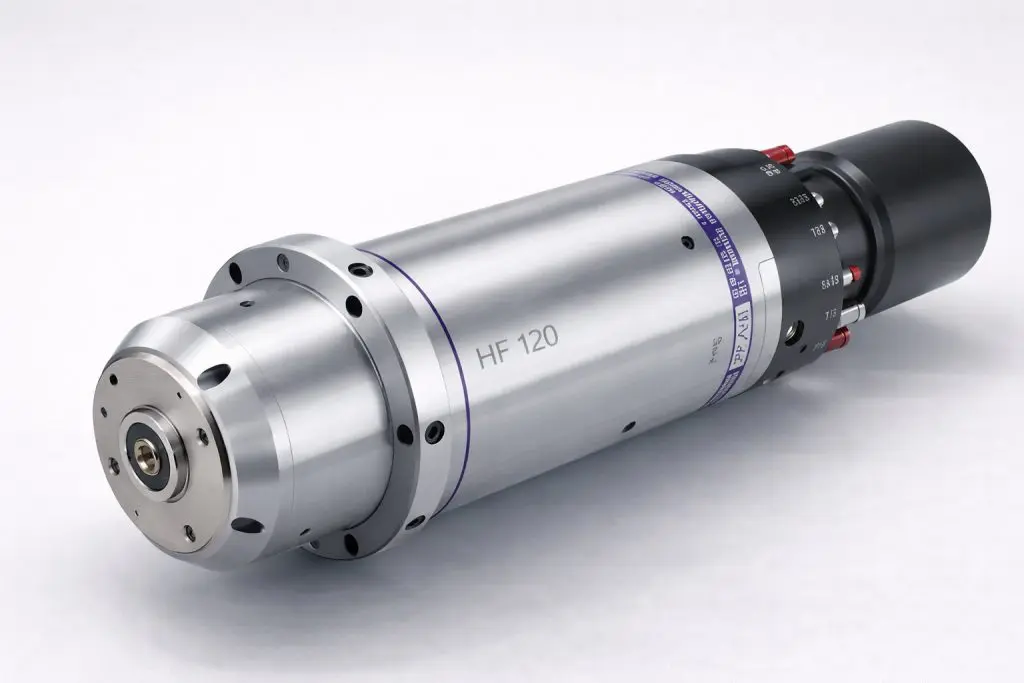
The HF120 is commonly installed in:
- Jig grinding and finishing operations
- High-speed machining centers
- Precision milling applications
- Environments where accuracy matters more than raw power
In these applications, even minor spindle wear shows up directly in the part.
Early Symptoms Seen in HF120 Spindles
Finish and accuracy degradation
Users often report:
- Surface finish slowly getting worse
- Small size deviations appearing across runs
- More frequent offset or tool adjustments
Quiet operation despite performance loss
Unlike production spindles:
- Noise remains unchanged
- Vibration may not be detectable
- Measurement reveals the problem first
What’s Typically Happening Inside the HF120
Bearing preload and balance changes
As bearings wear:
- Preload shifts slightly
- Micro-movement develops at the spindle nose
- Finish and accuracy suffer before noise appears
Because IBAG spindles are built for precision, small internal changes matter.
Why HF120 Issues Are Often Misdiagnosed
Most users first adjust:
- Tooling or holders
- Feeds and speeds
- Machine compensation
While these changes help temporarily, repeated accuracy loss often originates inside the spindle.
Repair Options for IBAG HF120 Spindles
Precision evaluation
A focused evaluation can:
- Assess bearing condition and preload
- Measure balance and radial accuracy
- Confirm whether rebuild is required
Precision bearing rebuild and re-balancing
When wear is confirmed:
- Bearings are replaced to OEM-level precision
- Dynamic balance is restored
- Finish and repeatability return
Manufacturer-Recommended Maintenance for IBAG HF Spindles
According to IBAG’s documentation for high-frequency precision spindles, maintaining accuracy depends heavily on correct operating and maintenance practices.
Manufacturer guidance generally emphasizes:
- Proper warm-up before precision machining
- Maintaining clean, stable cooling conditions
- Avoiding shock loads and improper tool handling
- Monitoring accuracy and finish trends over time
- Addressing changes early rather than waiting for noise
For full specifications and official guidance, always consult IBAG documentation.
👉 Reference:
IBAG High-Frequency Spindles – OEM Documentation
https://www.ibag.ch/en/products/high-frequency-spindles/
Preventative Practices That Help HF120 Spindles Last Longer
To preserve accuracy:
- Track surface finish and size stability
- Use consistent warm-up routines
- Address small deviations early
Precision spindles reward early attention.
Light CTA
If your IBAG HF120 still runs quietly but no longer delivers consistent accuracy or finish, an evaluation can help determine whether internal bearing wear is already affecting performance.
Illustration Disclaimer
Illustrations are representative and used for educational purposes; actual spindle configurations may vary.