
IBAG HF170 Spindle Repair: When Accuracy Shifts as Temperatures Rise
If you’re researching IBAG HF170 spindle repair, the spindle likely hasn’t failed outright. Instead, accuracy or surface finish changes become more noticeable as run time increases or as operating speeds rise. Early in a cycle, results may look acceptable—only to drift as thermal conditions change.
This behavior is common with HF170 spindles and usually points to bearing wear or preload changes affecting thermal stability, not sudden mechanical failure.
How the IBAG HF170 Is Typically Used
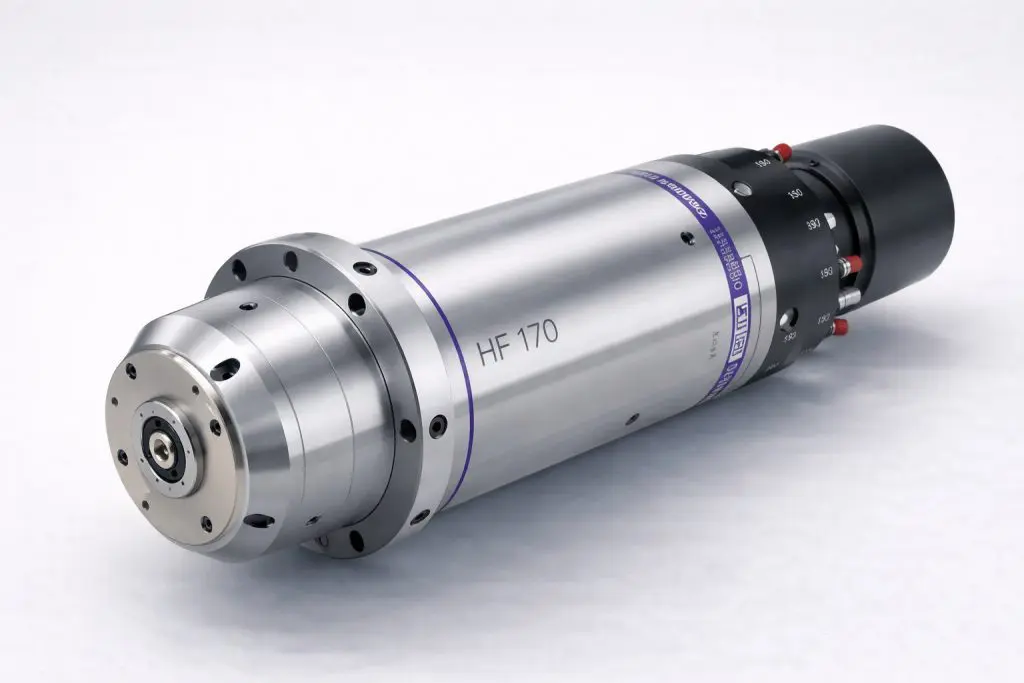
The HF170 is commonly installed in:
- Environments where thermal consistency matters
- High-speed precision milling centers
- Jig grinding and finishing applications
- Long-cycle or continuous-duty machining
These applications place sustained thermal demand on the spindle.
Early Symptoms Seen in HF170 Spindles
Accuracy drift over time
Users often report:
- Parts drifting out of tolerance during longer runs
- Finish variation that correlates with spindle temperature
- Increased need for warm-up or compensation
Stable behavior at startup
Early on:
- Noise and vibration remain minimal
- Results may appear normal at low temperature
- Issues develop progressively, not immediately
What’s Typically Happening Inside the HF170
Thermal sensitivity from bearing wear
As bearings wear:
- Heat generation increases
- Preload shifts with temperature
- Dimensional stability becomes less predictable
These effects usually appear before measurable runout or vibration.
Why HF170 Issues Are Often Misdiagnosed
Most users first adjust:
- Coolant flow or temperature
- Feeds, speeds, or cycle structure
- Machine compensation
While these steps may help temporarily, repeated thermal-related drift often traces back to the spindle itself.
Repair Options for IBAG HF170 Spindles
Thermal-behavior-focused evaluation
A proper evaluation can:
- Correlate accuracy changes with temperature rise
- Assess bearing condition and preload
- Determine whether rebuild is needed before damage escalates
Precision bearing rebuild and re-balancing
When wear is confirmed:
- Bearings are replaced to OEM-level precision
- Preload and balance are restored
- Thermal stability and accuracy return
Manufacturer-Recommended Maintenance for IBAG HF Spindles
According to IBAG guidance for high-frequency precision spindles, maintaining thermal stability and accuracy depends on proper operation and maintenance.
Manufacturer recommendations generally include:
- Allowing adequate warm-up before precision machining
- Maintaining stable cooling conditions
- Avoiding extended operation beyond intended duty cycles
- Monitoring accuracy trends rather than waiting for noise
- Addressing small changes early
👉 Reference:
IBAG High-Frequency Spindles – OEM Documentation
https://www.ibagnorthamerica.com/downloads
Preventative Practices That Help HF170 Spindles Last Longer
To reduce thermal-related wear:
- Track accuracy over long production runs
- Use consistent warm-up procedures
- Investigate temperature-related drift early
Precision spindles rarely fail suddenly—thermal behavior usually changes first.
If your IBAG HF170 holds accuracy at startup but drifts as temperatures rise, an evaluation can help determine whether internal bearing wear is already affecting thermal stability.
Illustrations are representative and used for educational purposes; actual spindle configurations may vary.