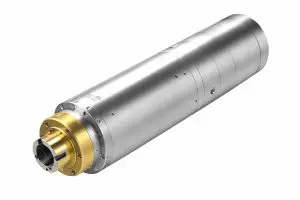
High-Speed Precision Spindles Where Balance and Thermal Stability Matter Most

Fischer spindles are known for ultra-high speed performance, extreme balance requirements, and tight thermal control. They’re commonly used in aerospace, medical, mold, die, and other precision environments where even small changes in spindle behavior can affect part quality.

When Fischer spindles develop issues, they rarely fail suddenly. Instead, users notice finish degradation, vibration at speed, or accuracy drift long before alarms or noise appear.

This page serves as an overview of common Fischer spindle repair scenarios, how problems typically present, and when repair makes sense versus continued operation or replacement.


What Makes Fischer Spindles Different

Fischer spindles are designed around:

  • Extremely high rotational speeds

  • Tight balance tolerances

  • Precision bearing systems

  • Thermal stability under sustained RPM

Because of this, Fischer spindle issues often show up as process problems, not mechanical failures.

Small internal changes that might be ignored in lower-speed spindles become very noticeable at Fischer operating speeds.


Common Applications for Fischer Spindles

Fischer spindles are frequently used in:

  • High-speed milling

  • Micro-machining

  • Aerospace and medical components

  • Mold and die finishing

  • Graphite and composite machining

In these applications, surface finish and dimensional consistency are often the first indicators of spindle condition.


Common Fischer Spindle Symptoms

Finish degradation at high RPM

One of the earliest Fischer warning signs is:

  • Finish breaking down only at higher speeds

  • Tool marks appearing despite good tooling

  • Improved results when RPM is reduced

This often indicates balance sensitivity or early bearing wear, not programming errors.


Speed-specific vibration

Users may experience:

  • Vibration in narrow RPM bands

  • Smooth operation outside those ranges

  • No obvious noise at idle

At Fischer speeds, even minor imbalance becomes amplified.


Accuracy drift during long runs

In sustained high-speed operation:

  • Parts may start in tolerance and drift later

  • Thermal effects become more noticeable

  • Compensation increases over time

This behavior commonly reflects thermal or preload changes inside the spindle.


Why Fischer Spindle Issues Are Often Misdiagnosed

Because Fischer spindles:

  • Often run quietly

  • May not show obvious runout

  • Rarely trip alarms early

Problems are frequently blamed on:

  • Tooling or holders

  • CAM strategies

  • Machine geometry

In reality, high-speed spindle condition is often the root cause.


Repair vs Replacement for Fischer Spindles

Fischer spindles represent a significant investment. OEM replacement can involve:

  • Long lead times

  • High capital cost

  • Extended downtime

In many cases, early spindle repair restores performance and extends service life—especially when issues are caught before secondary damage occurs.


What Fischer Spindle Repair Typically Involves

Depending on condition, repair may include:

  • Precision bearing replacement

  • Ultra-high-speed dynamic balancing

  • Thermal and vibration analysis

  • Run-in and stability testing

At Fischer speeds, balance and preload accuracy are critical to successful repair.


Manufacturer Guidance for Fischer Spindles

Manufacturer documentation for Fischer spindles emphasizes:

  • Proper warm-up before high-speed operation

  • Avoiding shock loads

  • Maintaining clean lubrication and cooling

  • Monitoring finish, vibration, and accuracy trends

  • Investigating changes early

Users should always consult official Fischer documentation specific to their spindle model and configuration.


Final Thought

Fischer spindles rarely fail loudly.

They communicate problems through finish changes, speed-specific vibration, and thermal drift first. Recognizing those signals early is the key to keeping repairs controlled and downtime minimal.


Illustrations are representative and used for educational purposes; actual spindle configurations may vary.

Request a Quote

This field is for validation purposes and should be left unchanged.
Name(Required)

  • Fischer Micromilling Spindle Preventative Maintenance

    By Atlanta Precision Spindles | 02/09/2026

    Protecting Tool Life, Finish Quality, and Micron-Level Accuracy Fischer micromilling spindles operate at the edge of what machining systems can tolerate. Tool diameters are small, tolerances are measured in microns, and spindle speeds amplify even the slightest imbalance or runout. In this environment, spindle problems rarely appear as loud failures or obvious alarms. Instead, they…

  • Fischer HSK-A Micromilling Spindle Repair

    By Atlanta Precision Spindles | 02/09/2026

    When Accuracy Drifts During Long Runs or Finishing Cycles Fischer HSK-A micromilling spindles are commonly selected for precision finishing and micro-feature machining where a balance of stiffness, accuracy, and high rotational speed is required. Unlike ultra-light HSK-E applications, HSK-A spindles are often used in longer machining cycles and slightly broader process windows. When issues develop,…

  • Fischer HSK-E Micromilling Spindle Repair

    By Atlanta Precision Spindles | 02/09/2026

    When Micro-Tool Life and Finish Degrade Without Obvious Vibration Fischer HSK-E micromilling spindles are designed for extreme precision, where tool diameters are small, cutting forces are minimal, and tolerances are unforgiving. In these environments, spindle issues rarely present as noise or obvious vibration. Instead, users notice shortened micro-tool life, subtle finish degradation, or instability at…

  • Fischer HSK Micromilling Spindles

    By Atlanta Precision Spindles | 02/09/2026

    Understanding the Fischer HSK Product Line for Ultra-High-Precision Machining Fischer HSK micromilling spindles are engineered for applications where extreme rotational speed, minimal runout, and thermal stability are non-negotiable. In micromilling environments, even small deviations in spindle behavior can directly affect tool life, surface finish, and dimensional accuracy. This page provides an overview of the Fischer…