
Mazak Spindle Repair
-
Mazak Machines That Commonly Require Spindle Repair
Many machining centers produced by Mazak use high-precision spindle assemblies designed for continuous production and high-speed machining. Over time, heavy cutting loads, long operating hours,…
-
Mazak Spindle Design Comparison
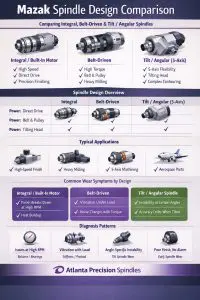
Comparing Integral, Belt-Driven, and Tilt / Angular Spindle Designs Mazak machines use different spindle designs depending on speed, torque, and machining flexibility requirements. While the…
-
Tilt / Angular Spindle Repair (5-Axis Mazak)
When Accuracy or Stability Changes With Head Orientation Mazak 5-axis platforms use tilt / angular spindle designs to maintain tool orientation during complex machining. These…
-
Belt-Driven Spindle Repair (Mazak)
High-Torque Spindle Performance When Load-Related Vibration or Noise Appears Mazak machines commonly use belt-driven spindle designs in applications where torque, robustness, and load handling are…
-
Integral / Built-In Motor Spindle Repair (Mazak)
High-Speed Performance When Finish, Heat, or Stability Starts to Change Mazak machines commonly use integral (built-in motor) spindle designs in applications that demand rapid acceleration,…
-
Mazak Spindle Design Classifications
Understanding Mazak Spindle Types by Design, Application, and Symptoms Mazak machines are known for rigidity, control technology, and long service life. When machining performance changes…
Frequently Asked Questions About Mazak Spindle Repair
Diagnosis and Failure Signs
What are the signs that a Mazak spindle needs repair?
Common warning signs include unusual noise, vibration, poor surface finish, overheating, tool chatter, and loss of machining accuracy. These symptoms often point to bearing wear, taper damage, or internal spindle issues that should be inspected before the damage gets worse.
Do Mazak spindle problems always start with noise?
No. Some spindle problems show up first as chatter, reduced part accuracy, higher operating temperatures, or subtle vibration before the operator hears obvious noise.
Why is spindle vibration a serious problem?
Spindle vibration can reduce part accuracy, hurt surface finish, shorten tool life, and increase bearing wear. If it is ignored, it can lead to more extensive spindle damage and longer downtime.
Causes of Failure
What causes Mazak spindle bearing failure?
Mazak spindle bearing failure is commonly caused by high operating speeds, heavy cutting loads, coolant contamination, lubrication breakdown, crashes, and normal wear over time. Damaged tool holders and taper problems can also place extra stress on the spindle.
Can a crashed Mazak spindle be repaired?
In many cases, yes. A crashed spindle may still be repairable if the shaft, housing, and critical internal components remain within acceptable limits. A full inspection is usually needed to determine whether repair is practical.
Repair and Rebuild
Can a Mazak spindle be rebuilt instead of replaced?
Yes. Many Mazak spindles can be rebuilt instead of replaced. A rebuild may include bearing replacement, taper inspection, drawbar repair, balancing, and testing. This is often more cost-effective than buying a complete replacement spindle.
What is included in Mazak spindle repair?
Mazak spindle repair typically includes complete disassembly, cleaning, inspection, precision measurement, bearing replacement, drawbar inspection or rebuild, taper evaluation, balancing, and final operational testing.
Bearing Life and Maintenance
How long do Mazak spindle bearings last?
Bearing life depends on spindle speed, cutting loads, machine usage, maintenance practices, and contamination levels. In production environments, bearing life can vary widely depending on how the machine is operated and maintained.
How can operators help extend Mazak spindle life?
Operators can help extend spindle life by keeping tool holders clean, avoiding crashes, monitoring vibration and temperature, maintaining coolant and air systems, and addressing unusual changes in performance early.