
HSD ES939 Spindle Repair: When Vibration Appears Only at Top RPM
← Back to HSD ES Series Spindle Repair
If you’re researching HSD ES939 spindle repair, you’re likely seeing a very specific pattern: the spindle runs smoothly at lower and mid-range speeds, but vibration or noise appears when operating near its maximum RPM. Operators may reduce speed to keep the machine stable, even though the spindle is designed for high-speed work.
This behavior is common with ES939 spindles and is usually tied to balance sensitivity caused by internal wear, not just tooling issues.
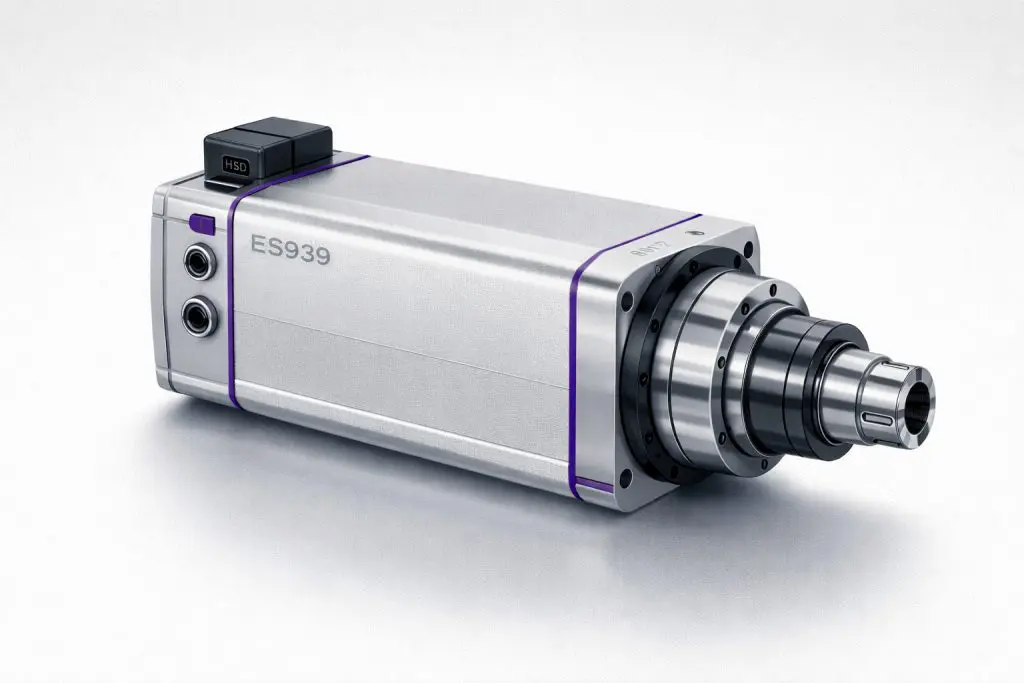
How the HSD ES939 Is Commonly Used
The ES939 is frequently used for:
- High-speed finishing operations
- Long production runs
- Nested-based manufacturing where surface quality matters
- Applications that rely on consistent top-end RPM
Because it operates near its speed limits, even small internal changes can become noticeable.
Early Symptoms ES939 Users Notice
Vibration only at high RPM
Typical reports include:
- Smooth operation at moderate speeds
- Noise or vibration that increases rapidly near maximum RPM
- Finish quality degrading only during high-speed passes
Operators “working around” the problem
Many users:
- Reduce RPM slightly to avoid vibration
- Assume tooling balance is the root cause
- Delay inspection because production can continue
What’s Typically Happening Inside the ES939
Balance sensitivity from bearing wear
As bearings wear:
- Internal balance degrades
- Centrifugal forces amplify small defects
- Vibration becomes noticeable only at high speed
Over time, this instability spreads to lower RPM ranges if not addressed.
Why ES939 Issues Are Often Misdiagnosed
Most users first suspect:
- Tool balance
- Toolholders
- Collets
While these components matter, repeated high-RPM instability across different tools often points to spindle imbalance rather than tooling alone.
Repair Options for ES939 Spindles
High-RPM evaluation and balance testing
A targeted evaluation can:
- Measure vibration at operating speeds
- Identify balance-related wear
- Determine whether rebuild is required
Bearing rebuild with precision balancing
When imbalance is confirmed:
- Rebuilding restores internal balance
- High-RPM vibration is eliminated
- Finish consistency returns
Why Reducing RPM Long-Term Gets Expensive
Avoiding top-speed operation:
- Reduces productivity
- Masks progressive wear
- Allows damage to spread internally
Early correction preserves both performance and spindle life.
Manufacturer-Recommended Maintenance for the HSD ES939
HSD’s official electrospindle documentation for the ES9XX series highlights maintenance practices that help preserve balance and bearing life.
Manufacturer guidance generally includes:
- Keeping the spindle taper and tool interface clean
- Monitoring spindle behavior across the full RPM range
- Ensuring proper airflow and cooling
- Avoiding unnecessary lubrication, as bearings are factory-lubricated for life
- Performing routine visual and functional checks
These practices align with field experience—balance-related issues worsen quickly when early vibration is ignored.
👉 Reference:
HSD ES9XX Series Spindle Manual (PDF)
https://www.manualslib.com/manual/1532502/Hsd-Es915.html
Preventative Practices That Help ES939 Spindles Last Longer
To reduce repeat issues:
- Monitor vibration trends at high RPM
- Maintain clean tooling interfaces to avoid added imbalance
- Address instability early instead of permanently lowering speed
High-RPM issues rarely resolve on their own.
Light CTA
If your ES939 runs smoothly at lower speeds but vibrates at the top end, an early spindle evaluation can determine whether internal balance is beginning to degrade.
Related Pages
- HSD ES929: When Aluminum Cutting Starts Causing Chatter
- HSD Spindle Bearing Guide
- Back to HSD ES Series overview
Ready to send in your ES939? Contact Atlanta Precision Spindles for an evaluation.
Illustration Disclaimer
Illustrations are representative and used for educational purposes; actual spindle configurations may vary,