
Is It the Anderson Router or the Spindle?
(How to Tell the Difference Before You Pull It)
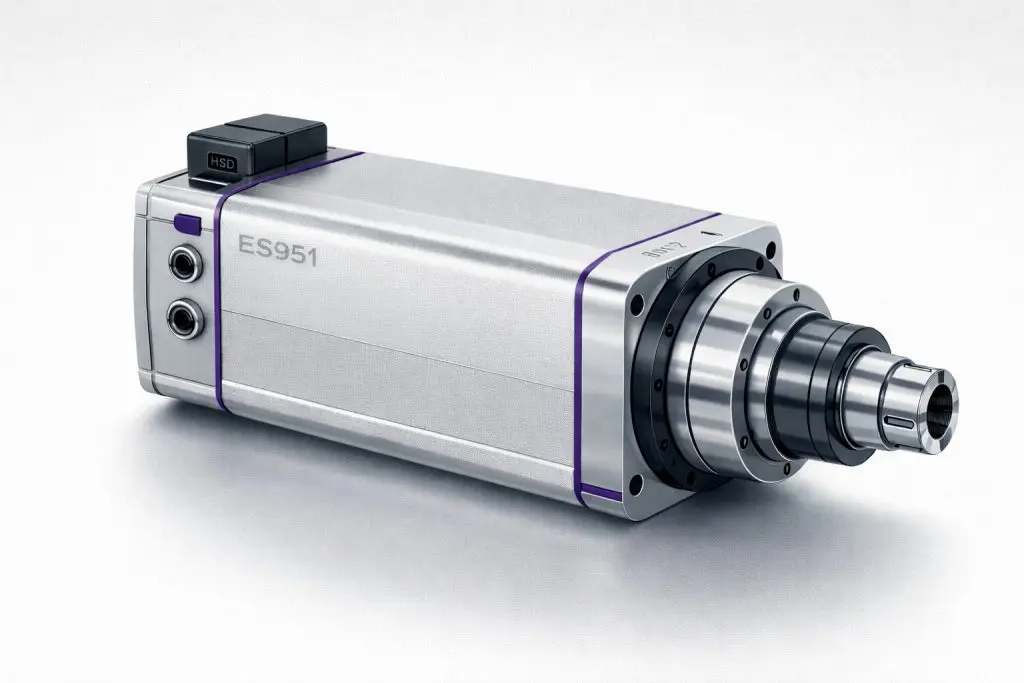
When cut quality drops or vibration increases on your Anderson CNC, the big question is:
Is the issue in the machine — or inside the spindle?
Most Anderson America routers use high-speed electrospindles, built In-House. Both the router structure and the spindle assembly influence finish quality, so proper diagnosis matters.
Symptoms That Usually Point to the Spindle
🔹 Vibration Increases with RPM (Even Unloaded)
If vibration gets worse as RPM rises — especially without tooling installed — that strongly suggests:
- Bearing wear
- Loss of preload
- Rotor imbalance
- Internal contamination
Machine structure issues usually don’t scale linearly with RPM like this.
🔹 Spindle Running Hot at Idle
If the spindle heats quickly without cutting load:
- Internal friction is increasing
- Grease may be breaking down
- Bearings may be near failure
That’s almost always internal.
🔹 Measurable Runout at the Taper
Check with a tenths indicator at the taper:
- Consistent measurable runout at the spindle nose
- Runout that does not change with gantry position
That typically indicates spindle shaft or bearing wear.
🔹 Noise Directly from the Spindle Housing
High-pitched whining, grinding, or cyclic rumble that follows RPM changes is usually bearing-related.
Symptoms That Often Point to the Router (Not the Spindle)
🔸 Vibration Changes by Axis Position
If finish varies depending on:
- Gantry position
- Table location
- Direction of cut
You may be dealing with:
- Linear rail wear
- Ball screw issues
- Frame resonance
- Loose mounting hardware
🔸 Chatter Only Under Cutting Load
If the spindle runs smoothly unloaded but chatters only when cutting:
- Tool deflection
- Workholding issues
- Dull tooling
- Feed/speed imbalance
- Machine rigidity limits
🔸 Electrical or Drive Alarms
If you see:
- Servo faults
- Axis following errors
- Drive overload alarms
That’s machine-side, not spindle-side.
Quick Diagnostic Process
Before removing the spindle:
✔️ Remove tooling and run at multiple RPMs
✔️ Check spindle nose temperature rise
✔️ Measure runout at taper
✔️ Move gantry to different positions and test again
✔️ Lightly load the spindle and observe changes
If the issue follows RPM regardless of machine position, it’s likely the spindle.
If the issue follows machine position or axis movement, it’s likely the router.
Why Proper Diagnosis Matters
Pulling a spindle unnecessarily causes:
- Production downtime
- Shipping costs
- Lost time if the spindle checks out healthy
But delaying spindle repair when bearings are failing can:
- Damage the shaft
- Overheat the stator
- Multiply repair costs
Early diagnosis saves money either way.
Important Disclaimer
Atlanta Precision Spindles repairs the spindle assembly only — not the CNC machine itself.
We do not service the router frame, linear rails, ball screws, controls, wiring, drives, or other machine components. Our work focuses strictly on precision spindle inspection, rebuild, and restoration.