-
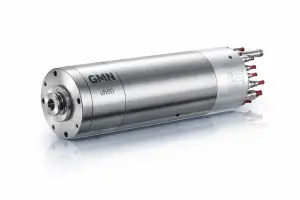
GMN UH 80 Spindle Repair: When Accuracy Slips Without Noise
If you’re researching GMN UH 80 spindle repair, the spindle likely hasn’t “failed” in an obvious way. It still runs quietly. There’s no chatter. Yet roundness, form, or repeatability are no longer what they used to be. For UH-series spindles, this is the most common failure pattern — accuracy degradation without audible warning. How the…
-
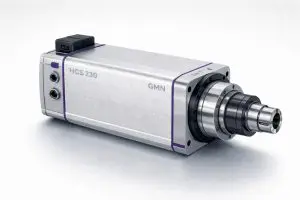
GMN HCS 230 Spindle Repair: When Power Reveals Vibration
If you’re researching GMN HCS 230 spindle repair, the spindle likely still runs smoothly at idle or during light grinding — yet vibration or chatter appears when you push the process. This is a common HCS 230 pattern and usually points to loss of internal stiffness, not poor setup or wheel balance alone. How the…
-
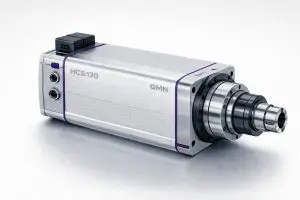
GMN HCS 170 Spindle Repair: When Accuracy Shifts Under Load
If you’re researching GMN HCS 170 spindle repair, the spindle likely still sounds smooth and runs without obvious vibration — yet accuracy degrades as grinding load or cycle time increases. This is a common HCS 170 pattern and usually points to thermal and bearing-related instability under load, not basic setup issues. How the GMN HCS…
-
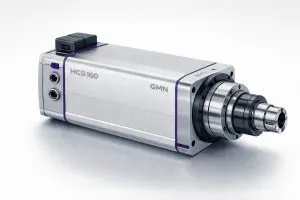
GMN HCS 160 Spindle Repair: When Precision Starts to Drift
If you’re researching GMN HCS 160 spindle repair, chances are the spindle hasn’t “failed” in the traditional sense. It still runs smoothly. It may not be loud. Yet parts are no longer holding size the way they used to. This is a classic HCS 160 scenario — and one that often points to bearing and…
-
HSD Spindle Comparison Guide
← Back to HSD Spindle Repair Understanding Common HSD Spindle Problems by Model HSD spindles are used across a wide range of CNC routing and production environments, from high-speed finishing to heavy, continuous operation. While they share a common design philosophy, different HSD spindle models tend to fail in different ways, depending on how they’re…
-
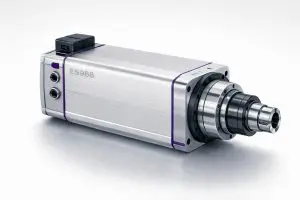
HSD ES988 Spindle Repair: Repair, Upgrade, or Replace?
← Back to HSD ES Series Spindle Repair If you’re researching HSD ES988 spindle repair, you’re often at a crossroads. The spindle still runs, but performance under load has changed. Vibration increases during aggressive cuts, heat builds during long cycles, and productivity begins to suffer. For ES988 users, the real question usually isn’t “Is something…
-
HSD ES951 Spindle Repair: When Problems Appear After Tool Changes
If you’re researching HSD ES951 spindle repair, you’re often dealing with a pattern that’s hard to pin down. The spindle may run acceptably during cutting, but alarms, hesitation, or instability appear after tool changes—especially during acceleration back to speed. This behavior is common with ES951 spindles and is frequently linked to bearing wear aggravated by…
-
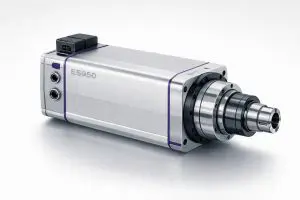
HSD ES950 Spindle Repair: Motor Problem or Bearing Failure?
← Back to HSD ES Series Spindle Repair If you’re researching HSD ES950 spindle repair, you’re often facing a confusing situation. The spindle may trigger alarms, hesitate during ramp-up, or show inconsistent performance — yet vibration and cutting quality don’t always clearly point to a mechanical failure. This is a common ES950 scenario. Because the…
-
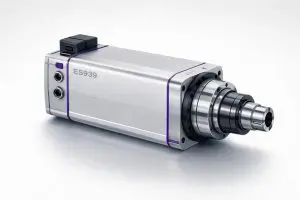
HSD ES939 Spindle Repair: When Vibration Appears Only at Top RPM
← Back to HSD ES Series Spindle Repair If you’re researching HSD ES939 spindle repair, you’re likely seeing a very specific pattern: the spindle runs smoothly at lower and mid-range speeds, but vibration or noise appears when operating near its maximum RPM. Operators may reduce speed to keep the machine stable, even though the spindle…
-
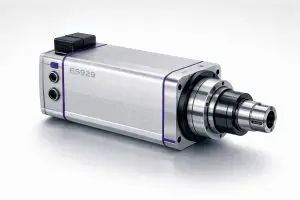
HSD ES929 Spindle Repair: When Aluminum Cutting Starts Causing Chatter
← Back to HSD ES Series Spindle Repair If you’re researching HSD ES929 spindle repair, you’re often facing a very specific problem: the spindle performs acceptably in wood or plastics, but begins to chatter or vibrate noticeably when cutting aluminum or handling heavier loads. This pattern is common with ES929 spindles and usually points to…
For Spindle Repair Call: (678) 225-7855